
The measure puts the country alongside Sweden and the United Kingdom, where regulators and the licensed sector itself have also pointed to fintechs as the solution to stop transactions from illegal operators.
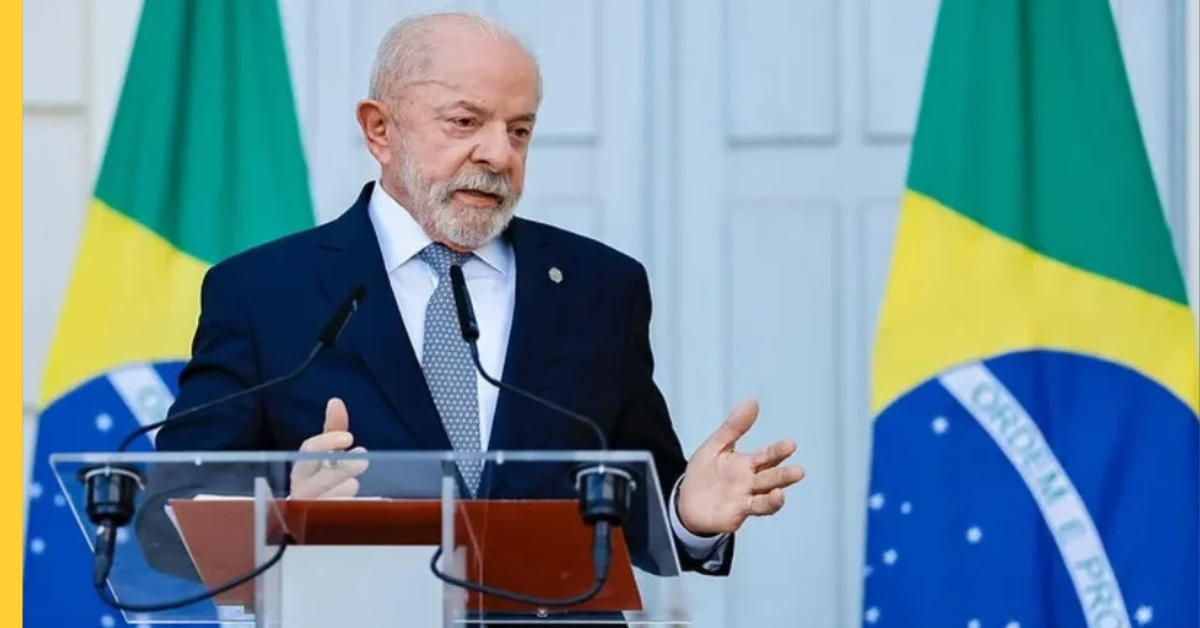
The Lula government notified 37 fintechs suspected of moving money from illegal betting houses in Brazil, in an offensive that has already taken down 54,000 clandestine sites.
The 37 notified fintechs processed transactions for 160 betting houses without authorization to operate in the country. The communication came from the Secretariat of Prizes and Bets (SPA), under the Ministry of Finance, together with the Federal Revenue Service.
The institutions must now sever ties with the irregular betting sites and prevent new financial operations on their behalf. Those that fail to comply will become jointly liable for the irregularities and may be fined based on the total amount moved.
The government did not disclose the names of the fintechs or the amounts involved, in order to preserve the confidentiality of the ongoing investigations.
Legal basis and deadlines
The basis for the notifications came from a decree signed by Lula in June, inspired by mechanisms from the Anti-Faction Law used against organized crime.
So far, no blocking has been carried out: the Finance Ministry gave financial institutions until the end of August to comply with the new rules. After that, the notifications will be accompanied by the freezing of funds and a process at the Ministry of Justice, which will investigate and act accordingly.
The path chosen by the Executive branch emerged after a failed attempt to have the Central Bank take on a more direct role.
The Central Bank argued that its role is limited to notifying about blocking requests, with the financial institution itself responsible for carrying it out, and that it can only issue warnings in cases of non-compliance.
Even so, the government has already recorded a practical effect: five companies that were operating clandestinely ceased activities shortly after the June decree was published.
According to Carlos Akira, co-founder of Syscapital and a specialist in regulated markets and financial education, the Executive branch and the agencies responsible for regulation have been stepping up enforcement actions in Brazil’s fixed-odds betting market.
According to him, the coordinated action between public agencies demonstrates the strengthening of regulation and oversight of the sector at a time of great visibility, driven by the FIFA World Cup.
“It’s also important to remember that, in 2027, Brazil will host the Women’s Football World Cup, another major event that will put the betting market in the spotlight,” he says.
The size of the illegal market
The government estimates that between 41% and 51% of betting sites operating in Brazil are illegal, totaling 25.2 million users.
These platforms do not pay the R$30 million licensing fee, do not collect the 12% tax on net winnings, ignore responsible advertising rules, and do not comply with the self-exclusion system.
Licensed operators, on the other hand, must be headquartered in the country, maintain a financial reserve of R$5 million, use the “.bet” domain, and comply with responsible gambling requirements.
How other countries are tackling this problem
In Sweden, the Swedish Gambling Authority (SGA) and the Financial Supervisory Authority published a report advocating greater information sharing between the two agencies regarding Swedish payment providers used by clandestine operators.
Since July 2023, the SGA has had the power to block payments from unlicensed operators and require payment companies to block illegal transactions, under penalty of sanction — as in the case of the fintech Zimpler, threatened with a fine of SEK 25 million (€2.1 million) for failing to block an unlicensed operator.
The report acknowledges, however, that it is still too early to assess the real impact of these powers.
In the United Kingdom, the Betting and Gaming Council (BGC), which represents licensed operators, asked the government for a five-point plan against the “alarming growth” of the black market.
According to BGC CEO Grainne Hurst, illegal betting could exceed £33 billion within three years, with nearly one in every five pounds wagered online potentially ending up with illegal operators.
Regarding President Lula’s measure, Leonardo Baptista, CEO of Pay4fun, stated: “I’ve been saying for a long time that the biggest ally of illegal betting was never technology, advertising, or any other factor. It was always money.
“An illegal operation can change domains, brands, servers, countries. But there’s one thing it can never give up: someone needs to receive the bettors’ money and pay out the prizes. That’s why I consider this one of the most important measures since the beginning of the regulation of the Brazilian market.
“For a long time we saw a race to take down sites: one would be taken down, ten others would pop up. Now the focus is starting to shift to where it really hurts, the financial infrastructure that keeps these operations breathing,” says Leo.
“There’s no betting without payment, and there’s no underground market without institutions that, through action or omission, allow billions of reais to keep circulating outside the regulated environment.”
“Holding the entire financial chain accountable is a necessary step. Whoever keeps operating for illegal companies is not a victim of regulation, they are making a business choice and must answer for it,” he concludes.