
Paraguay is moving towards a major overhaul of its gambling laws, with plans to establish an independent regulator with powers to crack down on unlicensed operators.
The government-backed legislation, submitted to Congress on 12 October, would replace the National Gambling Commission (Conajzar) with a new regulator, the National Directorate of Gambling (Dinajzar).
Dinajzar would have its own legal status and greater financial and operational independence than its predecessor.
Javier Balbuena, a lawyer and former head of Conajzar, told NEXT.io that the legislation is “highly likely” to pass, with a consensus forming among lawmakers around the need to revamp the existing regulatory structure.
The bill is currently being examined by several Senate committees, which held a joint meeting on 26 October to discuss the reforms.
Balbuena said the main disagreements concern the proposed extension of licensing periods from five to up to 10 years, and how gambling revenues should be distributed between regional and municipal governments.
“Previously we´ve had partial proposals and temporary solutions,” he said. “Now Congress is aiming for a complete structural overhaul.”
Paraguay seeks stronger powers against illegal gambling
The proposed reforms come less than two years after oversight of Conajzar was moved from the Ministry of Economy and Finance to the National Directorate of Tax Revenue (DNIT).
However, Balbuena said that restructuring had failed to deliver the intended improvements, with the regulator unable to respond effectively to illegal gambling or progress licensing processes. The move had “weakened administrative processes,” Balbuena added.
Under the new proposals, Dinajzar would gain greater autonomy and enforcement capabilities, including powers to act against unauthorised online gambling websites and payment providers.
Balbuena said the regulator would be able to order telecommunications companies and financial institutions to block illegal websites, applications and payment gateways. There would also be penalties of up to five years in prison for illegal operators.
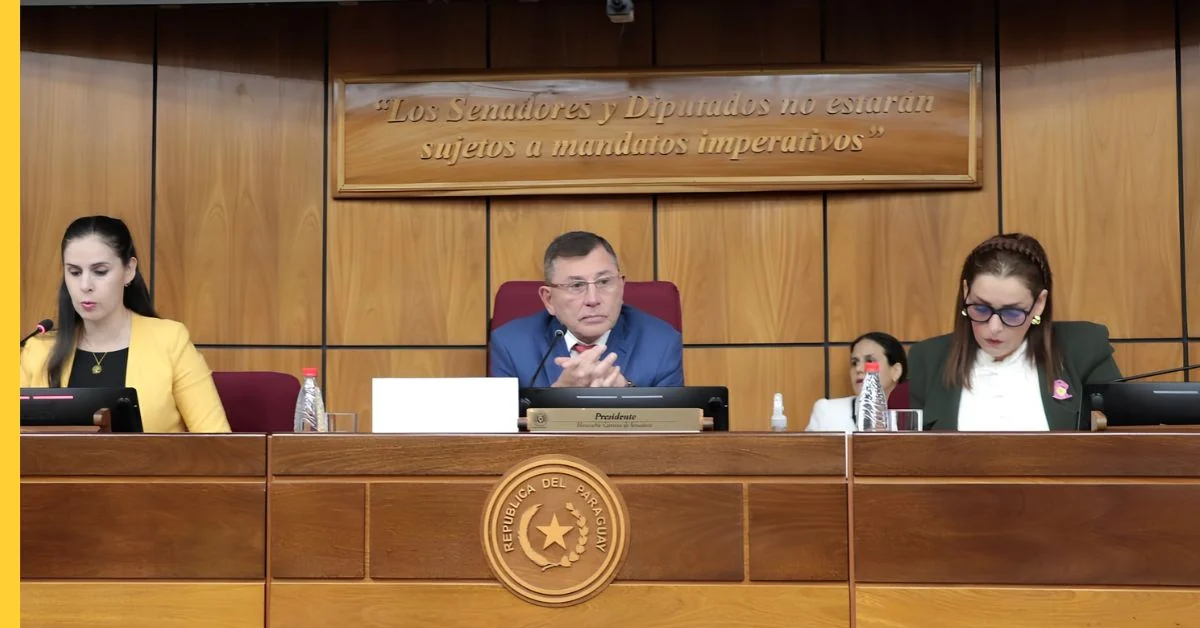
The scale of the enforcement challenge was highlighted during a Senate committee meeting on Monday.
Senator Luis Pettengill (pictured) said Conajzar currently has just 12 officials responsible for overseeing gambling across the entire country.
“We have a major lack of control over gambling involving minors in cities throughout the country,” Pettengill said.
He added that lawmakers intend to produce a more definitive version of the legislation within 15 days.
Online casino market could see further expansion
The proposed reforms could see new licences issued to online casino, bingo and sportsbook operators. Balbuena said the country currently has more than 20 authorised online casino operators.
However, despite the introduction of legislation in 2025 that allows more sportsbook licences to be issued, Aposta.la remains the vertical’s only regulated brand.
Balbuena said the new legislation would establish a more formal competitive framework for online gambling, with licensing decisions based on technical and financial requirements.
“The final number of licences will no longer depend on legal monopolies or provisional schemes, but rather on the technical, financial and platform approval conditions established by Dinajzar,” he said.
According to local media reports, the proposals plan for 26 online gambling licences, with existing provisional authorisations expiring by January 2028.
The reports also suggested that licensees will need to pay a minimum monthly fee of PYG 12 million (€1,843) and 7% of GGR.
Balbuena said the precise tax burden is still to be confirmed, but noted that VAT was not currently imposed directly on bets.
Gambling winnings of PYG 500,000 (approximately €77) or more are subject to an 8% withholding tax.
New protections for players and advertising restrictions
The proposed changes would also introduce tighter requirements for player identification, responsible gambling and advertising.
The legislation would look to introduce deposit limits, monitoring of potentially harmful gambling behaviour and a centralised self-exclusion register.
Advertising restrictions would include limits on when gambling promotions could appear, as well as a ban on marketing directed at minors.
In addition, the measures would require influencers, media organisations and other businesses promoting gambling to register with the regulator.
The bill remains in the Senate committee stage, with no date announced for a full parliamentary vote.