
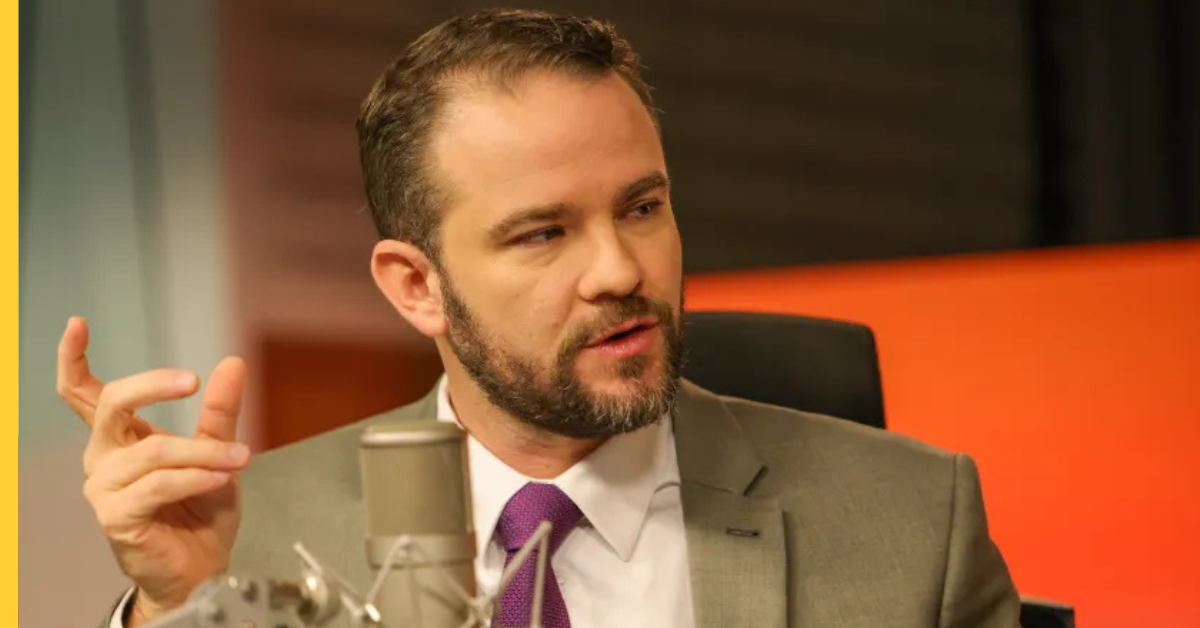
The Ministry of Finance announced this Friday (29) that it intends to tighten advertising rules for betting houses in the country. Minister Dario Durigan confirmed new measures to reduce the reach of these ads.
“We will continue taking measures to reduce and limit betting advertising. Whether through administrative acts, which we already have the authority to do, or, if necessary, through a provisional measure,” said Dario Durigan during the announcement of the Desenrola Adimplentes program at the Planalto Palace.
Provisional measure held in reserve
Durigan indicated that the intention is to limit the promotion of betting services through administrative acts, based on powers the Executive branch already holds.
If necessary, the government is considering issuing a provisional measure to reinforce the restrictions. Specific details have not yet been disclosed.
The statement was made during the presentation of the Desenrola Adimplentes program at the Planalto Palace. The minister reaffirmed that the federal administration will continue adopting initiatives to reduce the population’s exposure to betting platform advertising.
Desenrola Adimplentes aims to expand access to credit for informal workers, private sector employees, and Fies students, with debt renegotiation at interest rates of up to 1.99% per month.
Anyone who joins the program will have their registration blocked on all betting platforms for six months, a restriction aimed at preventing renegotiated credit from being directed toward betting.
The trigger: CazéTV scrutiny during the World Cup
The announcement comes amid scrutiny of betting advertising during the World Cup. Senacon is investigating ads shown by CazéTV after channel staff disclosed odds, QR codes, and promotions tied to live game plays.
Senacon believes this practice blurs the line between editorial content and advertising, and Conar suspended the ads through an injunction. The council found that the content could mislead the audience by encouraging in-the-moment betting.
CazéTV said it adjusted its ads following complaints from viewers and has since adopted a more conservative standard for this type of promotion.
Lawyers point to a regulatory gap
According to experts, the case exposed a legal gap regarding broadcasters’ responsibility for third-party advertising content.
“The accuracy and correctness of advertising information or communication is the responsibility of whoever sponsors it. The rule is that the advertiser must prove the accuracy of its communications,” says Fábio Kujawski, partner at Mattos Filho.
“The media outlet where the ad appears, in theory, is not responsible for correcting the ad run on its platform,” he states. According to him, there is no joint liability provided for under current legislation.
Udo Seckelmann, head of Gambling and Crypto at Bichara e Motta Advogados, told staging-latam.next.io/ that the case highlighted that there are still gray areas regarding the limits of action and potential liability of broadcasters and platforms in disclosing betting-related content.
“In the specific case of CazéTV, the discussion arose because commentators referred to odds and bets during the sports broadcast, but Ordinance SPA/MF No. 1,231/2024 does not contain an explicit and objective prohibition of this type of conduct. In other words, the debate does not necessarily stem from a clear regulatory violation, but from the lack of more specific parameters for situations where editorial content and promotional content end up overlapping,” explains Seckelmann.
Scrutiny reaches Globo, SBT, and N Sports
On June 26, the Ministry of Justice and Public Security opened a procedure to also verify possible irregularities at Globo, SBT, and N Sports.
All three broadcasters, like CazéTV, have betting houses among their World Cup sponsors. The measure expands the scope of oversight to the entire tournament broadcast market, not just the case involving CazéTV.
First World Cup under regulation
This is the first World Cup since fixed-odds betting was regulated at the end of 2023, and the industry considers the tournament the peak revenue period of the year.
CazéTV brings together three sponsors from the same segment simultaneously, Betnacional, Bet365, and KTO, an unusual setup in a broadcasting market that typically sells exclusivity by category.
After the investigations began, the channel said it had adjusted the ads following complaints from the public and began adopting a more conservative standard for this type of advertising.