
In São Paulo, a bill that bans betting advertising in any municipal public space is set to go to a vote in August, with sanction already guaranteed by Mayor Ricardo Nunes.
Betting companies invested almost half a billion during this period and, despite the massive presence of advertising, the city is preparing to follow the example of Rio de Janeiro, Belo Horizonte, Recife, and Aracaju and ban this type of advertising in public spaces through a bill.
An ad every minute
The brands’ presence is notable in the urban landscape: on Avenida Paulista, 20 betting advertising spots were mapped, with ads displayed every 60 seconds on average on digital panels, according to exclusive research by Folha.
The interval varies, ranging from 30 to 90 seconds at bus stops and between 70 and 90 seconds on digital clocks.
The four operators—Betano, BetMGM, Superbet, and bet365—rank among the 100 largest advertisers in the country in 2025, according to data from Ibope-Advertising Intelligence.
Betano holds 17th position (R$616 million), followed by BetMGM in 37th (R$365 million), Superbet in 51st (R$265 million), and bet365 in 53rd (R$260 million).
The display is managed by concessionaires such as JCDecaux Brasil, which operates a thousand digital clocks until 2038 and Metrô-SP lines until 2036, and Eletromidia, which manages 6,500 panels and bus shelters, with expansion planned to 7,500 by 2042.
The OOH media sector generated R$827 million between January and March 2026 alone, representing 14.8% of the national advertising market, behind only TV and internet.
There is an important regulatory gap: the Secretariat of Prizes and Bets (SPA/MF) prohibits ads in locations intended for minors, but bus shelters have no technical mechanism to filter the exposed audience.
Currently, the São Paulo City Hall states that campaigns follow the legislation and current contracts, without interference in commercialization, and Metrô-SP states it has no internal rule banning ads from the sector.
Municipal wave advances
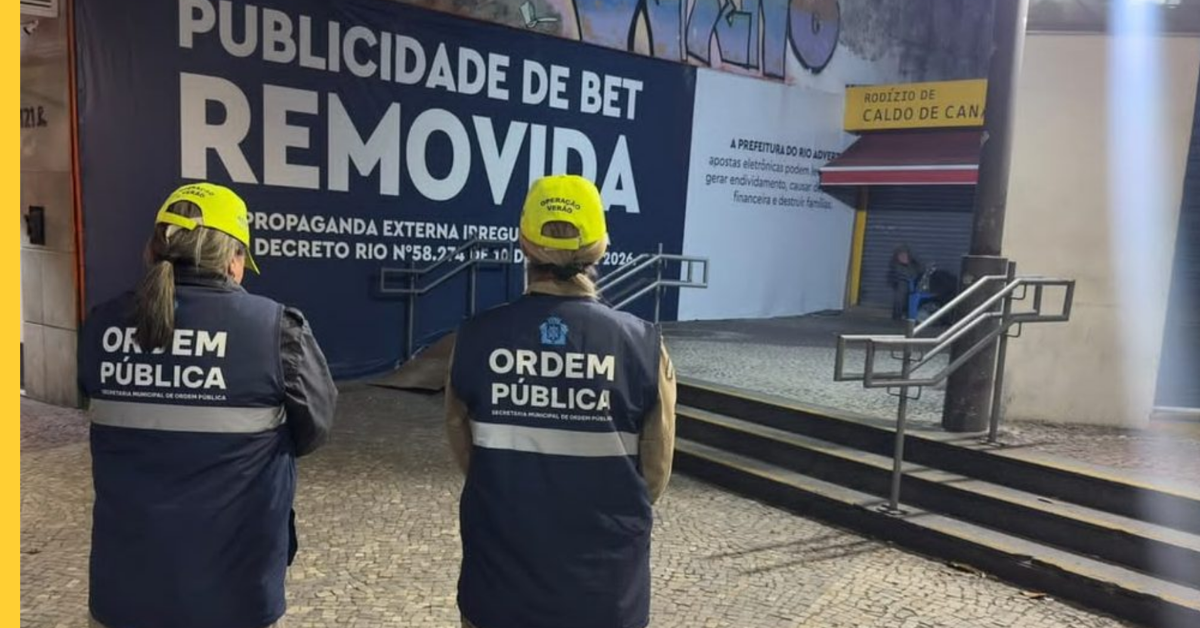
The ban movement spread in July 2026. It began in Rio de Janeiro, with a decree by Mayor Eduardo Cavaliere, dated July 13, which fully banned advertising in public spaces and locations under municipal authorization.
In Belo Horizonte, a decree from July 14 banned ads on municipal properties and urban furniture, in addition to establishing a 100-meter radius around schools, museums, and children’s facilities.
Next, Aracaju issued Decree No. 8,740, of July 16, banning any betting promotion (brand, app, or logo) in any medium, without a distance criterion.
In Recife, meanwhile, council member Jô Cavalcanti’s bill proposes a 200-meter ban radius around schools, the widest among the cities.
In São Paulo, PL 560/2025 (by council member João Jorge) is being processed alongside PL 553/2025 (by Adrilles Jorge), with an expanded scope to ban advertising in any municipal public space.
The vote is scheduled for August 2026, and Mayor Ricardo Nunes has already committed to signing it into law.
In parallel, the federal government issued ordinances on July 17 banning the presentation of betting as a source of income, investment, or easy money, in addition to banning sports analysis that induces betting.
The SPA stated that municipalities can create rules, but these rules cannot exceed the limits set by the Constitution nor interfere with matters that are the federal government’s responsibility.
Arguments
Lawyer Bernardo Cavalcanti Freire, representing ANJL, classifies the stance of city halls as “political rather than technical,” stating that Rio’s decree ignores illegal gambling.
According to him: “A regulated market, which pays taxes and generates thousands of jobs, is the target of an unfounded attack.”
Companies such as Superbet reinforce the relevance of OOH media in consolidating the market, while Diego Bittencourt, COO of Start Bet, advocates for differentiating between regulated and illegal companies, arguing that restricting communication from those operating within the law reduces the visibility of authorized operators.
Institutionally, Beatriz Gimenez Costa, from OAB-SP, advocates observing the market before making new adjustments, stating that “advertising will be extremely important for consumers to bet safely.”
Cristiano Costa, psychologist at EBAC (Brazilian Company for Support to the Compulsive), warns that messages that encourage urgency or associate betting with financial security can distort consumer perception.
Finally, the Brazilian Institute of Responsible Gaming (IBJR), which represents bet365, BetMGM, and Betano, stated that it will not comment on the bans.