
The number of Brazilians who place bets tripled during the 2026 World Cup, rising from 11% to 34.8% in June, even amid alleged public rejection.
The Brazilian sports betting market recorded unprecedented growth during the group stage of the 2026 World Cup.
The share of the population that made transactions to betting platforms jumped from 11% in May to 34.8% in June, at the start of the tournament, according to Folha de S. Paulo.
The data show that betting growth occurred despite the peak moment of debate about the sector in Brazil. While regulatory and political discussions intensify, onboarding and financial movement indicators continue to rise.
Rising demand
Financial transaction data via Open Finance, consolidated by fintech Klavi, indicate that audience engagement grew not only in user volume, but also in purchasing power during the FIFA tournament.
- World Cup effect: The base of active bettors nearly tripled, reaching more than a third of the Brazilian population.
- Rise in average ticket: The average amount deposited per user, which was around R$ 188 before the tournament, settled above that level. On June 14, the day after the match between Brazil and Morocco, the average ticket peaked at R$ 524 per bettor.
- Concentration of bets: The survey shows that 10% of users move a financial volume 20 times greater than the other 90% combined, highlighting the importance of high rollers for the market.
The nighttime factor and the responsible gambling debate
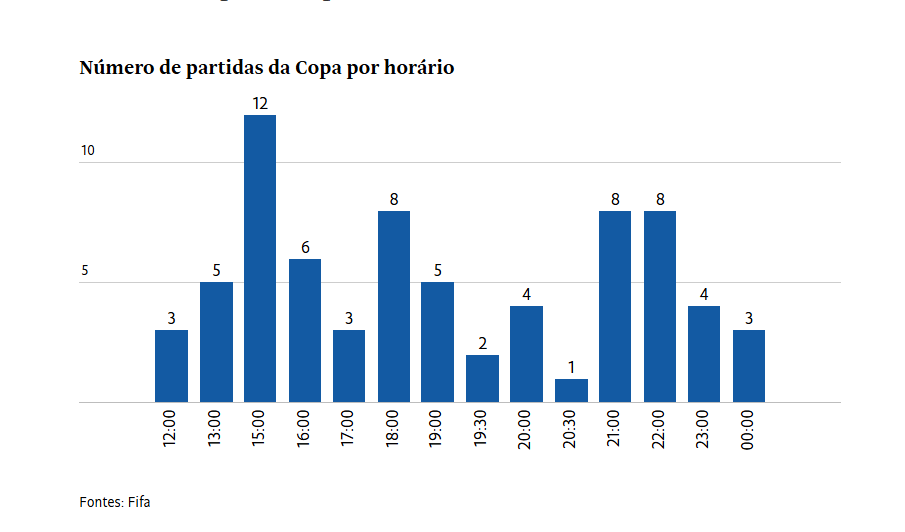
More than 60% of deposits were made after 6 p.m., coinciding with the prime-time broadcast slot.
Compliance analysts point out that the high activity after 6 p.m. accelerates regulatory monitoring of the ecosystem, and that this concentration of transactions during nighttime hours raises the sector’s exposure to governance and responsible gambling compliance risks.
The scenario led to investigations launched by Senacon and the Ministry of Justice against media outlets (such as CazéTV, Globo and SBT), focusing on auditing commercial practices and possible legal liabilities arising from irregular advertising during broadcasts.
Unico’s numbers
Data released by digital identity provider Unico show that the onboarding (registration) and KYC (identity verification) chain operated at record levels during the group stage.
The company recorded 19 million transactions, with an average of 2.4 million verifications per day. During the Brazilian national team’s goal, the system processed a peak of 40,000 transactions per minute.
Fernanda Beato, an executive at Unico, states that the ecosystem’s behavior serves as a stress test for the sector’s compliance rules.
“When a regulated sector is put to the test at maximum scale for the first time, what is being assessed is not just processing capacity, but the consistency of real-time decision-making. These numbers show that it is possible to sustain volume, speed and security without any trade-off,” says Beato.
Reinforced customer support
According to Grupo EGB, the controller of the Esportes da Sorte brand, the company expects a 45% increase in support volume during the World Cup, from 230,000 to 335,000 monthly contacts across chat, email and voice, according to Roberta Cinti, Head of People and Culture at Grupo EGB.
According to the company, support cases related to risk and responsible gambling currently account for about 5% of monthly volume (11,500 interactions), monitored by systems that flag atypical patterns, prolonged session times, elevated browsing frequency and unusual financial movements.
Operational data versus public scenario
The Open Finance and identity verification figures indicate that current enforcement measures and regulatory discussions did not cause an immediate slowdown in the volume of financial deposits or in registration flow during the tournament.
On the contrary, Klavi’s survey, based on the regulated market, indicates that the World Cup attracted new bettors, expanding the user base compared to the period before May.
For Plínio Lemos Jorge, president of ANJL, it’s important to highlight that oversight initiatives regarding potential abusive advertising are welcome. The sector’s own self-regulation, carried out jointly by Conar and the industry, already provides for checking whether advertisements comply with what the legislation determines.
“However, one cannot make a simplistic or biased analysis of the growth in the number of users in this context. It is precisely advertising that differentiates legalized betting, which operates under the scrutiny of the regulatory authority, from illegal betting,” he says.
“In this scenario, responsibly conducted advertising is among the main components of bettor protection, since it makes clear that it is a safe, risk-free platform,” he continues.
“Finally, in the specific case of the Klavi survey, it’s natural that there would be an increase in the user base and also in the average bet ticket amid the World Cup, the biggest of all football events. We always hope that bettors have fun, responsibly, on legalized platforms and not on clandestine ones.”
What the betting companies say
For Dimitri Araujo, Marketing Director at Sportingbet, the Klavi data reflects behavior already observed by operators during major sporting events. According to him, Brazilian National Team matches concentrate greater activity before, during, and after games, driving betting volume.
The executive emphasizes, however, that increased activity during the World Cup does not guarantee long-term retention. According to him, some users remain active after the tournament and migrate to other competitions and products, while another portion has more seasonal behavior.
“In our internal analyses, the key metric isn’t just how many users come in, but how many repeat their deposit and remain active in markets outside the National Team in the following weeks,” he says.
For this reason, indicators such as second deposit and betting frequency are the main parameters for measuring sustainable growth in the customer base.
According to Alexandre Fonseca, CEO of Superbet, the company recorded growth during the World Cup, in line with internal expectations and the dynamics observed in the market. The executive stated, however, that the company does not disclose performance data as it is considered strategic information.
“As a point of reference, Brazil recorded relevant growth in Blask’s absolute index, which monitors World Cup-related demand in 42 countries. Between the three weeks prior to the tournament, from May 22 to June 10, and the first three weeks of competition, from June 11 to 30, the country advanced 13%, positioning itself in the intermediate range of the global ranking,” he says.
“Brazil’s result was below markets such as Germany, with a 34% increase, and Argentina, with 30%, but above the United Kingdom, which recorded 9% growth,” he concludes.