
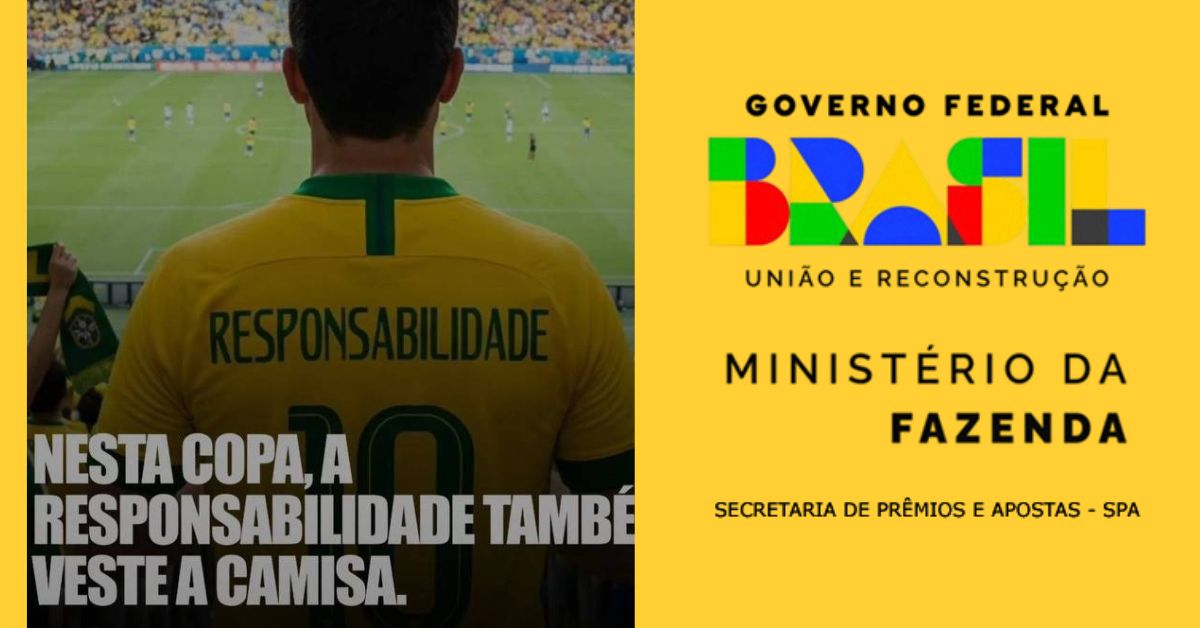
The Ministry of Finance edited a post on Instagram that promoted responsible gambling after a wave of criticism from followers who argued that the government should discourage betting, not normalize it.
Due to the controversy, industry members spoke out, and some believe that the MF made a mistake by not affirming the regulated activity.
The original caption advised the public to “play responsibly.” Comments harshly rejected the approach. The episode reveals a structural tension in the regulated market.
One follower wrote that “there is no responsibility in gambling”; another accused the ministry of making “government propaganda” for the sector.
The criticized excerpt was removed from Instagram, but the post remained active on other platforms.

Several industry professionals, especially lawyers who work in the industry and advocate for regulation and legal gambling, spoke out.
Ana Bárbara Teixeira, a specialist in Regulatory Law at ABRAJOGO, comments: “Amid the unnecessary controversy that led to the removal of the phrase ‘play responsibly’ by the SPA, it is time to restore rationality to the debate on gambling regulation in Brazil.
“Regarding the shrill attacks: the country democratically made a mature decision, aligned with global consensus, by regulating gambling as a legitimate social phenomenon, a form of entertainment that, like the responsible consumption of alcohol, should be practiced with moderation and awareness.”
She continues: “It is up to the regulator, above all other actors, to firmly defend this essential message. Far from being optional, the inclusion of the warning was legitimate and mandatory, fulfilling the institutional duty to protect the regulated market, which operates within the rules and generates tax revenue essential for the country.
“‘If you’re going to gamble, do it responsibly’ is not an occasional slogan, but the civilizational foundation of the regulation itself, a premise that must be promoted with conviction by all social agents, operators, media, and authorities.”
Mariana Xavier Leite, a lawyer specializing in Fixed-Odds Betting Regulation and Compliance, believes there was no communication error by the government; rather, there was a misinterpretation by some sectors of the media and society.
She compares the initiative to “Don’t drink and drive” campaigns: the goal is prevention, not encouragement. In her view, raising awareness is not the same as encouraging, and guiding the public on safe practices is a legitimate and necessary function of the Government, especially in the context of combating the illegal market.
Camila Ribeiro, a lawyer specializing in consumer civil law, believes that in this context of adaptation, it is natural for part of the population to still view with distrust a market often associated with negative experiences.
“This perception is, to a large extent, a consequence of the delay in regulating the activity itself, which ended up giving room for operators to act without proper oversight for years,” she comments.
She concludes: “The challenge of communication governance, therefore, is to reverse this scenario and clarify that the goal is not to approve or disapprove of fixed-odds betting, but to promote healthy coexistence between the population and an already existing activity, reinforcing the principles of responsible gambling, consumer protection, and awareness of the risks involved.”
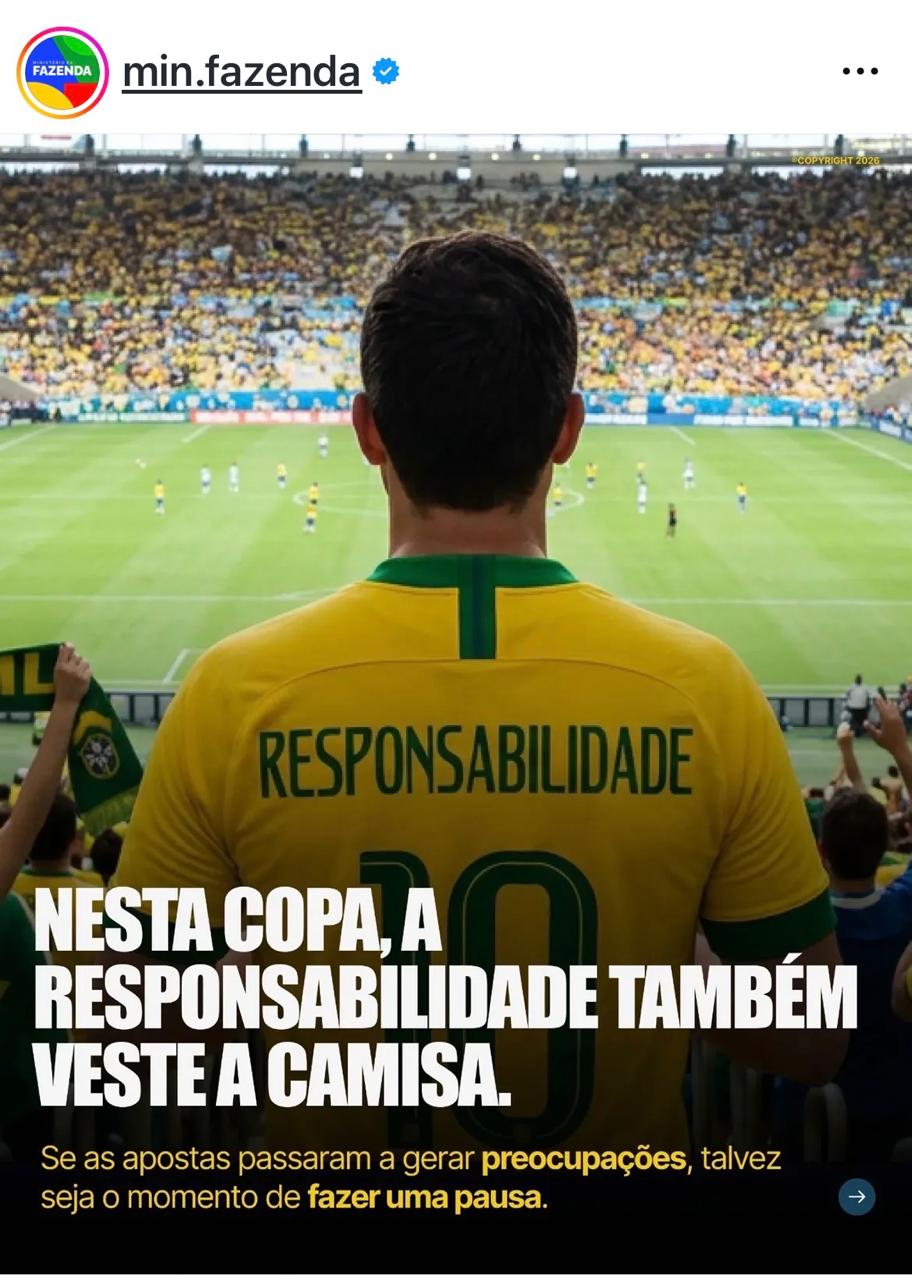
In a statement, the ministry said the post resulted from a cooperation agreement between the Secretariat of Prizes and Betting (SPA) and the Digital Council of Brazil, aimed at strengthening the security and compliance of the regulated betting market.
The ministry added that a Conar standard requires the inclusion of standardized warning messages about responsible gambling in advertising materials.
The ministry framed the post as an effort to promote the Centralized Self-Exclusion Platform, launched in December 2025, which allows users to block access to all platforms authorized by the SPA through a single request.
The tool has already registered nearly 700,000 self-blocking requests, with 41% of users citing loss of control over gambling and the impact on mental health as the main reason for joining.
The episode highlights a tension that has run through the Brazilian regulated market since the Lula government formalized the regulatory framework in 2025.
How enforcement work has been going
The government simultaneously stepped up its crackdown on illegal operators, removing 780 social media profiles, 306 posts promoting irregular betting, and 190 unauthorized apps, while at the same time promoting tools such as self-exclusion as proof of a responsible and functional regulated market.
Conar issued 4,081 notices to betting sites in 2025, of which only 44, about 1%, were directed at licensed operators, with the remainder aimed at the illegal market. The advertising self-regulation body maintains that the problem lies with unlicensed activity, not with communications from the regulated sector.
Conar’s board did not comment when approached by the staging-latam.next.io/.
reportFor the public, however, the distinction makes no difference. The ministry’s followers on Instagram weren’t reading a regulatory manual, but rather a government account telling them to keep betting, just without overdoing it.