
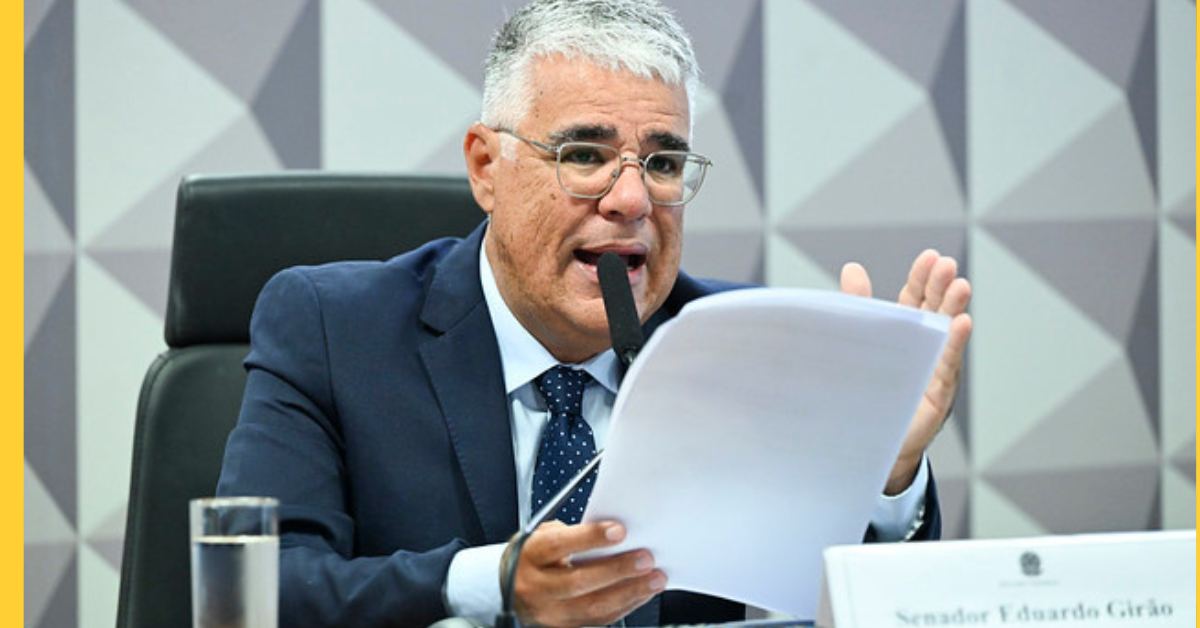
The debate brought together government representatives, experts, and consumer protection groups, while a bill restricting retention mechanisms awaits processing.
A public hearing held by the Senate’s Social Affairs Committee (CAS) and Human Rights Committee (CDH) discussed this Thursday (2) the social, economic, and public health impacts of fixed-odds betting.
While the debate progresses in Congress, Bill 1018/2026, which proposes restricting mechanisms used to retain bettors, has remained without movement since March.
The bill
Bill 1018/2026, authored by senator Eduardo Girão (Novo-CE), proposes amending Law 14,790/2023 to prohibit mechanisms used to incentivize and retain bettors on fixed-odds betting platforms.
The text specifically bans loyalty programs, cashback, and promotions aimed at encouraging continued betting behavior.
Introduced on March 9, the bill’s last action was its referral for publication on the Senate floor. Since then, it has remained without a rapporteur and has not been sent to a subject-matter committee, according to the Senate’s bill-tracking system.
If approved, the bill would affect CRM programs and retention strategies used by licensed operators, with potential impact on loyalty metrics and customer lifetime value (LTV).
The hearing
While chairing the session, Girão advocated for the repeal of Law 14.7U0/2023 itself and described the current situation as a “humanitarian tragedy,” citing the proliferation of betting advertisements during the World Cup.
Federal government representatives presented data on the current state of the sector. Gabriella de Andrade Boska, from the Ministry of Health, stated that Brazil treats betting as a public health issue, in line with the World Health Organization.
According to her, more than 25 million people placed bets in the country in 2025, with a 4.4% prevalence of gambling disorder, and SUS (public health system) treatments related to betting grew 140% between 2018 and 2025.
Fabio Macorin, deputy secretary of the Secretariat of Prizes and Bets (SPA/MF), stated that the department is summoning all authorized operators to present their behavioral monitoring systems.
According to him, regulation requires platforms to identify changes in betting patterns and adopt gradual intervention measures, which may include alerts, usage restrictions, and, in extreme cases, user exclusion.
Meanwhile, Procon-SP’s executive director, Luiz Orsatti Filho, noted that the market estimate for 2025 was R$160 billion, but actual volume exceeded R$350 billion. He described the situation as “a new pandemic.”
A survey by the agency, from January this year, found that more than 80% of consumers surveyed said they had received betting offers without prior request, and about 40% reported debts associated with betting.
Experts stated that the digital environment increases the risk of addiction due to continuous access to platforms, instant payments, and the use of technological features that encourage users to keep playing.
Next steps
Thursday’s hearing was the first of two public sessions planned on the topic. The second has not yet had a confirmed date.
For the regulated market, the next developments to watch are the holding of the second public hearing and the possible referral of Bill 1018/2026 to subject-matter committees, a necessary step for the bill to move forward.