
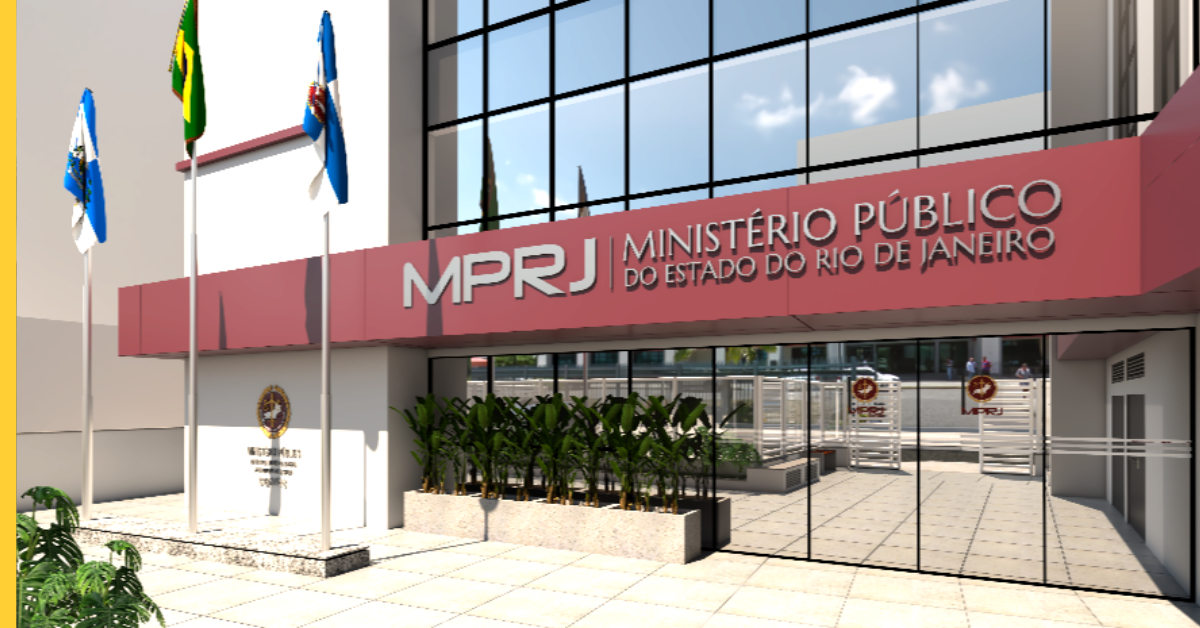
The Rio de Janeiro Public Prosecutor’s Office (MPRJ) launched Operation Dirty Bet on Thursday, the 13th, against a group suspected of operating ten illegal betting sites and laundering more than R$1.4 billion.
Operation Dirty Bet involved the Cybercrime Combat Unit of the Special Task Force Against Organized Crime (CyberGAECO/MPRJ), with support from the Security and Intelligence Coordination Office (CSI/MPRJ), and carried out seven search and seizure warrants, issued by the 3rd Specialized Criminal Court for Organized Crime, in Rio, São Paulo and Bahia.
The action had support from São Paulo’s CyberGAECO, Bahia’s GAECO, and the Secretariat of Prizes and Bets (SPA), part of the Ministry of Finance, which collaborated with the investigations.
According to the Criminal Investigation Procedure (PIC), the organization operated through ten sites: furiabet.bet, galeradabet.bet, voude.bet, alfagames.bet, pixbr.io, pixdasorte.io, jogadacerta.net, aposteibet.bet, goathbet.com and bravabet.io, none of them authorized by the Ministry of Finance.
Users’ deposits were directed to shell companies, and the platforms prevented bettors from withdrawing available account balances.
Following that, the group laundered the money by converting it into crypto assets, spreading the amounts across multiple accounts, and sending remittances abroad, with the aim of reintroducing the capital into the formal economy.
Transactions exceeding R$1.4 billion
A Financial Intelligence Report from Coaf, comprising more than 800 suspicious activity reports between 2022 and 2026, identified financial transactions exceeding R$1.4 billion attributed to the scheme.
Of that total, more than R$100 million would correspond, on its own, to a single company involved, not yet publicly identified by the MPRJ.
During the execution of the warrants, a car and two cellphones were seized in Rio de Janeiro.
In Bahia, two luxury cars, electronic devices and cash in dollars, euros, pounds sterling, Chilean pesos and Peruvian soles.
In São Paulo, two more luxury cars, watches, cash, cellphones and electronic devices. The MPRJ told staging-latam.next.io/ that this is an ongoing investigation and responded indirectly.

Licensed bet also under investigation
Hours before Dirty Bet, the Federal Police had already launched Operation Arena, together with the Public Prosecutor’s Office, the Ministry of Finance and the Federal Revenue Service, targeting suspected money laundering and currency evasion involving Pixbet, one of the country’s most recognized licensed betting sites and master sponsor of Flamengo, and its lawyer Nelson Wilians.
The action led the Secretariat of Prizes and Bets to suspend Pixbet’s federal license that same day, for failure to comply with responsible gaming rules.
A day later, the SPA tightened the net further: it applied six more precautionary measures, affecting 14 betting sites in total, operated by Pixbet, Zeroumbet, Enseada, Select, Nexus and RR Participações, for failures in sending mandatory information to the SPA’s monitoring system. Contacted, the SPA had not responded by the time of publication.
There is no confirmation that Dirty Bet and Arena are investigating the same scheme.
For Brazil’s regulated betting market, the two cases on the same day illustrate distinct risk fronts that coexist side by side: enforcement against illegal operators with no authorization whatsoever, and growing scrutiny over already licensed operators.
For Helio Moraes, partner at PK Advogados, a cybersecurity specialist and member of IBDEE, the persistence of schemes like Dirty Bet stems from failures by payment intermediaries, “who process deposits for shell companies without checking the nature of the business, compounded by the State’s limited ability to act preventively, since oversight today is almost always retrospective, not real-time.”
He estimates that more than half of online bets in Brazil still take place at illegal operators, advocating for joint action between SPA, Anatel and the Federal Police, as well as holding payment intermediaries accountable.
Regarding the use of crypto identified in the investigation, he recalls that Ordinance SPA/MF No. 615/2024 already bans this for licensed bets, but it does not reach illegal ones. However, starting in October this year, exchanges will be supervised by the Central Bank, raising the sector’s compliance standards.
“In practice, however, he believes that cracking down on the illegal market tends to benefit licensed operators, since they currently compete with rivals that bear no compliance costs at all, as they operate outside the regulated system,” says Moraes.