
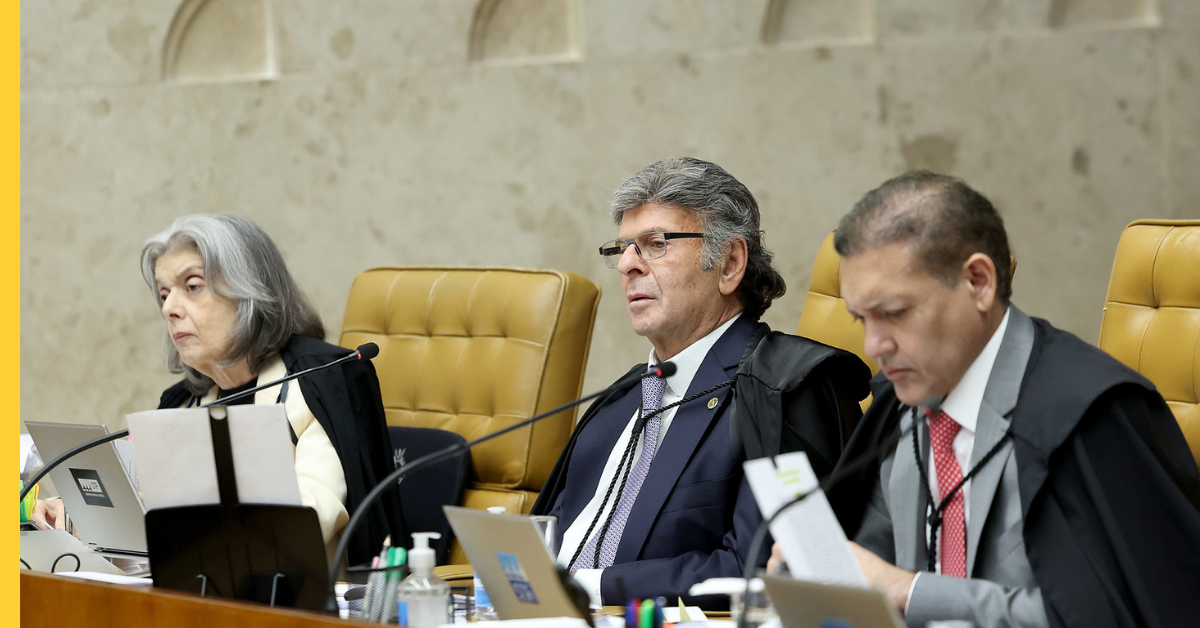
After setting the trial calendar for next month, the Federal Supreme Court (STF) has scheduled the date to determine the future of the ban on bingo, physical casinos, and jogo do bicho for August 5.
Previously scheduled for April 23, the agenda was postponed, and now Extraordinary Appeal 966.177 has returned to the center of discussions on the constitutionality of the 1941 law that criminalizes games of chance in Brazil.
It is important to note that the decision does not concern betting sites, which currently operate in a regulated manner under Law No. 14.790/2023.
What should be decided in the trial of the Extraordinary Appeal
The main point of the trial relates to the exploitation of games of chance, which, to this day, is considered a crime under the Criminal Misdemeanor Law.
According to article 50 of the law, “establishing or exploiting a game of chance in a public place or one accessible to the public” is strictly prohibited, punishable by imprisonment and a fine ranging from R$2,000 to R$200,000.
The issue itself arose from a case in which the Appellate Panel of the Special Criminal Courts of Rio Grande do Sul ruled that the exploitation of games of chance, physical casinos, and bingo would not be punishable.
The understanding was that the 1941 law would be incompatible with the principles of individual freedom and free enterprise set forth in the 1988 Federal Constitution.
Even with the decision of the Rio Grande do Sul court, the Public Prosecutor’s Office of Rio Grande do Sul appealed to the STF to enforce the rules set out in the Criminal Misdemeanor Law.
Therefore, technically, the STF is ruling on the constitutionality of the criminal ban on the exploitation of games of chance in Brazil, including physical casinos, bingo, and jogo do bicho.
History of the Extraordinary Appeal on physical casinos, bingo, and jogo do bicho
The case reached the STF in 2016, with the Supreme Court recognizing that the merits held national relevance in economic, legal, political, and social terms.
At the time, Justice Luiz Fux, the rapporteur, pointed out that the issue goes beyond the interests of the parties involved in the RS case, requiring a uniform decision from the STF for the country.
From this, Extraordinary Appeal 966.177 emerged, with the main events related to it being:
- 2016: STF recognizes Extraordinary Appeal 966.177 as having general repercussion
- 2017: STF decides on a Procedural Question regarding the suspension of cases and statute of limitations
- 2022: Formal entry of amici curiae linked to the sector, including the Bingo Association (ASBIN)
- 2026: Case is scheduled for a merits trial on April 23
- August 5, 2026: date of the trial on the criminalization of games of chance
Major impact on the market
Whatever it may be, the decision should cause a major impact on games of chance, physical casinos, bingo, and jogo do bicho.
One of the main reasons for this is related to the various resort casino projects, which are awaiting approval of Bill 2.234/2022 to enter the market.
The bill, which has already been approved by the Chamber of Deputies and by the Senate’s Constitution, Justice, and Citizenship Committee (CCJ), is ready for a vote.
If approved, it will allow the construction of physical casinos in integrated resorts, tourist hubs, and vessels. In the interior of São Paulo, for example, the city of Olímpia has opened a bidding process to attract resort casino projects to the city.
Hard Rock, one of the sector’s leaders, is also already planning to develop resort casinos in Fortaleza (CE), Jericoacoara (CE), Ilha do Sol (PR), and Gramado (RS).
If the bill is approved, São Paulo could receive up to 3 physical casinos integrated into resorts, while the state of Rio de Janeiro could have up to 2.
In addition, bingo and jogo do bicho could also be regulated.
In other words, the STF’s decision could decriminalize the activity even before the bill is approved by the Senate and regulation is implemented.