
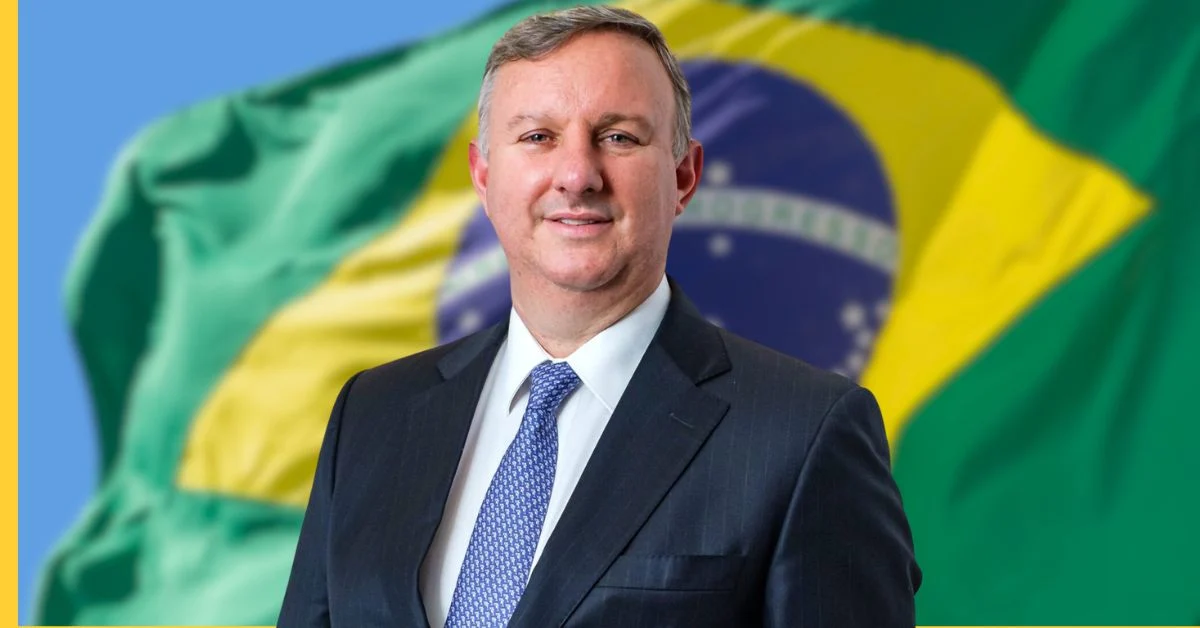
Brazil’s gambling sector will go through a period of “a lot of turbulence” if President Lula proceeds with the provisional measure to ban online casinos, warns a specialized lawyer.
In a webinar organized by staging-latam.next.io/ and Pragmatic Solutions, held yesterday (September 17), Neil Montgomery, founding partner and director of Montgomery, stated that “if the measure is adopted, we will experience moments of a lot of turbulence”.
“Lawyers who are part of the sector will have to roll up their sleeves and work hard to help their clients navigate treacherous waters,” he explained.
Montgomery’s comments come after the publication of reports claiming that the Brazilian government is preparing an executive decree to ban online casino games. The order is expected to be published in the coming days.
President Luiz Inácio Lula da Silva, who has expressed his intention to end online gambling on several occasions, could approve the final text before the first round of the general elections on October 4.
Although the measure would not affect sports betting and sponsorship agreements, the consequences for the sector would be very serious. Casino games account for the majority of licensed operators’ revenue; in some cases, up to 70%.
National cause or political maneuver?
For Montgomery, it is a political matter.
“Lula’s popularity is falling, and the rumors about the provisional measure are likely a response to an attempt to win voter support,” he pointed out.
This is not the first time the sector has been at the center of debate.
For months, an anti-betting narrative has been gaining strength in Brasilia, driven by a steady stream of legislative proposals seeking to restrict or ban the activity. However, this time, unlike previous instances, it could move from words to actions.
One of the great contradictions is that it was Lula himself who, in 2023, signed the law regulating betting in the country — a regulatory framework that Montgomery has described as solid and rigorous.
It is worth mentioning that a provisional measure is not the final word. The decree must be reviewed by Congress within 60 days (extendable by another 60 days).
“Lula cannot impose a total ban on his own. He needs the support of Congress,” the lawyer noted, stressing that such support is not guaranteed. Congress passed the 2018 and 2023 laws and might not approve a ban if it considers the current regulations sufficient to protect players.
What operators should do
It is important for operators to act before the measure takes effect.
In this regard, Montgomery has outlined several fronts of action.
According to the lawyer, industry associations must be prepared to file a collective challenge, likely before the Supreme Court.
He has also advised platforms to plan ahead. While the measure is in effect, companies will not be able to carry out any activity, and therefore will not be able to generate revenue.
He also noted that other legal avenues could be explored, such as requesting injunctive relief in ongoing labor or consumer protection disputes.
For Ashley Lang, executive director of Pragmatic Solutions, it is essential to have adequate capital and technology and compliance systems capable of adapting to a changing regulatory landscape. Product differentiation is also a key pillar for continuing to gain market share, even in a more restrictive environment.
The executive stressed that the ban is “a low-probability, high-impact event”.
“The end of Brazilian football”
Brazil’s top football clubs expressed their opposition to the possible ban on betting in the country. They believe that if the measure were implemented, the economic impact on the institutions would be so great that it could even mean “the end of Brazilian football”.
Through a text published on social media, Flamengo, Palmeiras, Corinthians, Santos and Fluminense, among other teams, decided to take a stand against the government.
The clubs have acknowledged the challenges brought about by the expansion of online betting and consider it necessary to “improve protection, oversight, education, and prevention measures, in order to reduce risks and guarantee a responsible market.”
Nevertheless, they have insisted that the ban will not make betting disappear. “It will only open the way for consumers to migrate completely to clandestine platforms, which do not pay taxes, do not respect limits, do not offer protection tools, and do not cooperate with the authorities,” they have emphasized.
In addition, they have explained that sponsorships “are not limited to the largest clubs. The resources reach smaller teams, promotion divisions, and competitions with less exposure” and “there is no other economic segment capable of immediately replacing this investment. This will drive many clubs into insolvency.”
Finally, they have described as “essential” the need to “combat illegality, without endangering a market that has been regulated by the State itself.”
“Football acknowledges its responsibilities and wants to take part in the solution in a rational and conscious way,” they have stated.