
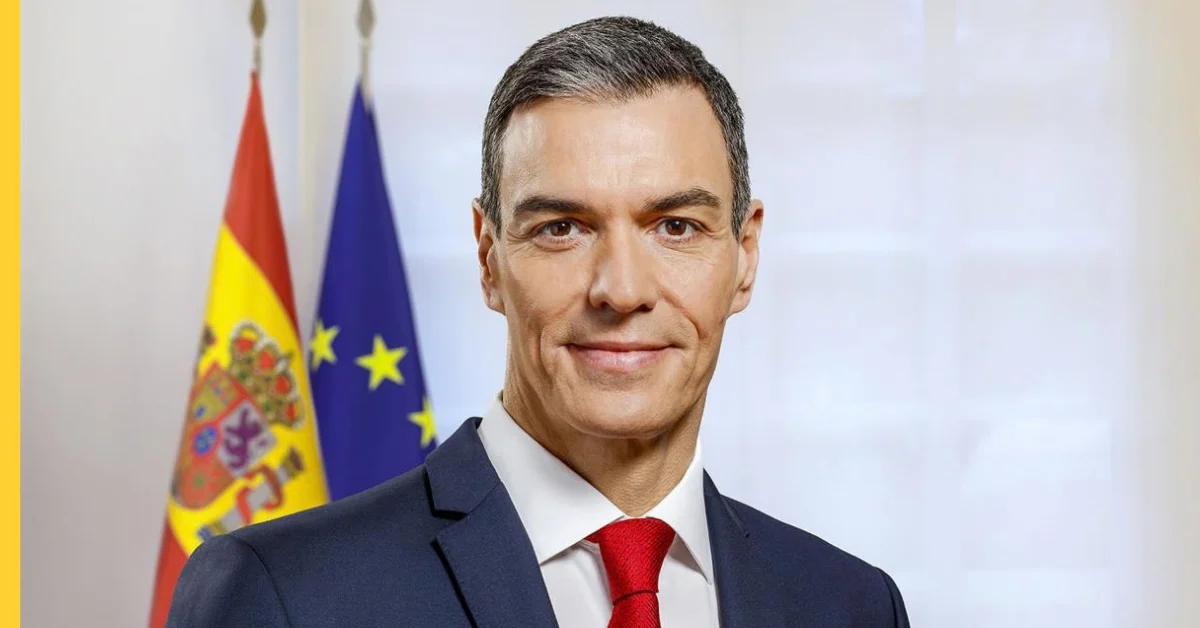
Spain’s gambling industry faces a scenario of uncertainty following the call for a snap election on November 29, announced by Pedro Sánchez yesterday (October 5). The news comes amid preparations for the reform of the Gambling Act.
The trigger for the election call was the defeat in Congress, last Friday, of the two housing decrees drawn up by the Government. Against this backdrop, several measures affecting the gambling sector are now up in the air.
Cristina Romero, partner at Loyra Abogados, told NEXT..io that the early general election represents “a significant pause and, potentially, a change of direction” with regard to the reform of Law 13/2011.
However, the lawyer made clear that the election process does not pose an obstacle for measures that have already come into force, such as the joint deposit limits system.
Gambling Act reform halted by the election
The Ministry of Social Rights, Consumer Affairs and Agenda 2030 launched a public consultation earlier this year on the reform of Law 13/2011.
The reform includes controls on gambling advertising featuring celebrities and influencers, restrictions on customer acquisition promotions, limits on search engine advertising, and an expansion of warnings about the risks associated with betting.
Over the summer, the Directorate General for the Regulation of Gambling (DGOJ) met with various industry bodies, such as Jdigital, LaLiga, SELAE, ONCE and CEJUEGO, to gather the views of citizens, organizations and stakeholders before drafting the final bill.
However, the text did not manage to pass the public consultation stage before Sánchez called the snap election.
Romero de Alba explained that this means its parliamentary processing will now be left in the hands of the next Government. “The work done during the public consultation remains relevant, but any amendment to Law 13/2011 will require a new legislative process,” the lawyer noted.
This is not the first delay to the bill. In 2025, the Government attempted to introduce changes to the Gambling Act through the Customer Service Act, but the Senate removed them and the law ended up being approved without them.
The stance of the PP and Vox on gambling remains unclear
Polymarket gives Alberto Núñez Feijóo, leader of the Popular Party (PP) — the center-right bloc — an 80% chance of becoming the next president. Although he may need the support of the far-right Vox party to form a Government.
According to Romero de Alba, it should not be assumed that a right-wing Government will take a more lax approach to regulating the sector.
“It would be wise to be cautious when portraying the PP or Vox as inherently more or less restrictive on gambling matters,” she pointed out.
In December 2025, the PP used its majority in the Senate to remove the amendments to the Gambling Act included in the Customer Service Act.
However, Romero de Alba said this was a procedural decision and highlighted that the party has previously backed measures aimed at strengthening consumer protection.
In February of this year, PP senator Elena Castillo called for increased spending to prevent problem gambling and warned that “carrying a casino in your pocket is no game.”
Despite this, neither the PP nor Vox has put forward a detailed gambling proposal ahead of the November general election.
“In its 2019 election manifesto, the PP pledged to regulate gambling advertising and fund campaigns to prevent problem gambling,” said Romero de Alba. “Its current stance on advertising restrictions, bonuses, deposit limits and player protection is less clear.”
“Vox has an even less clear public stance regarding the regulatory framework,” she added.
Joint deposit limits remain on schedule
Regardless of the election result, measures already approved will not be affected.
This includes Royal Decree 520/2026, approved in June, which establishes joint deposit limits per player. The new system, applicable from March 2027, sets joint deposit limits of 700 euros daily, 1,750 euros weekly, and 3,300 euros over a four-week period.
“The elections, by themselves, do not affect the timeline for the joint deposit limits,” Romero de Alba stated.
In any case, the decree faces new judicial scrutiny. The online gambling trade association Jdigital has filed an administrative appeal before the Supreme Court against the measure, considering it disproportionate and lacking legal basis.
The association already successfully presented a similar argument in April 2024, when the Supreme Court struck down several articles of another Royal Decree. The court determined that some of the restrictions relating to online promotions and advertising exceeded the powers the Government could exercise by decree.
“This does not mean the challenge to the deposit limits will succeed,” Romero de Alba stated. “The provisions and legal basis are different and will be analyzed independently. However, it does show that the limits of regulatory authority constitute a genuine legal issue, and not merely an industry argument,” she clarified.
Gambling will not be a decisive factor in the elections
It seems unlikely that gambling will be a decisive factor at the ballot box. Instead, the election campaign is expected to focus mainly on Spain’s housing crisis.
“Gambling regulation could be part of broader debates on consumer protection, public health, and the digital economy, but there is little indication that it will be a decisive element,” Romero de Alba noted.
What lies ahead for the sector is “regulatory continuity” in the short term, followed by a scenario of “considerable political uncertainty,” the lawyer concluded.