
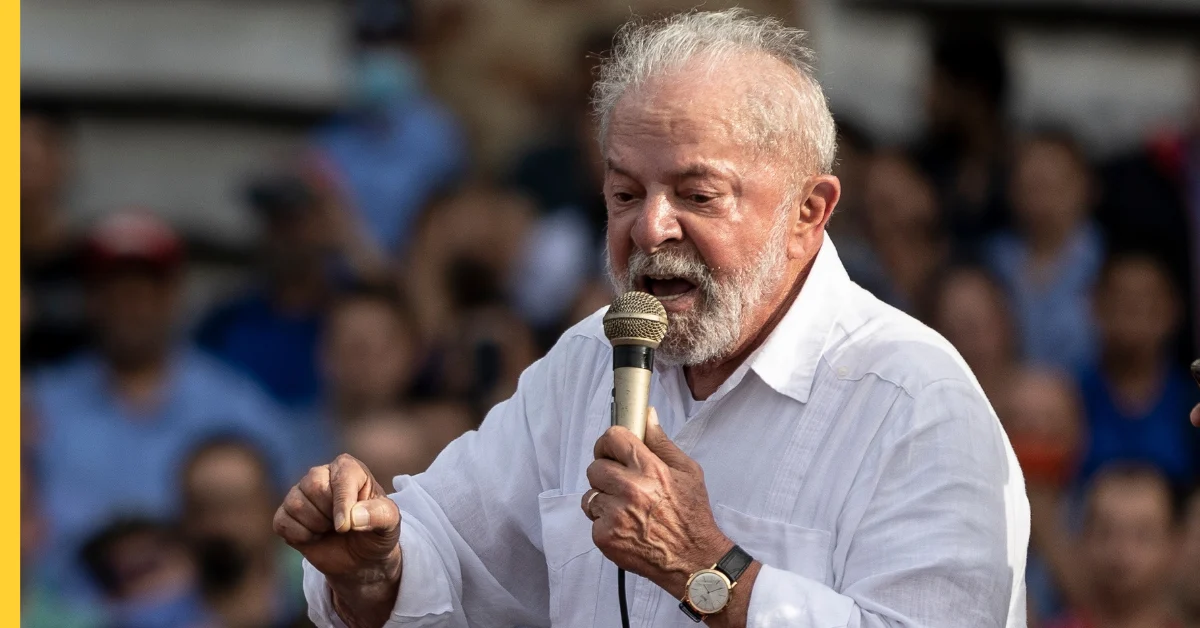
In December 2023, President Luiz Inácio Lula da Silva signed into law the regulation of fixed-odds betting in Brazil, paving the way for one of the largest regulated markets in the world.
On Friday (September 25), the same pen signed Provisional Measure (MP) No. 1,394/2026, which bans sports betting and online casinos in the country.
The weekend showed how each player reacted to the turnaround. Operators organized to take the matter to court, the government turned the ban into a campaign banner a week before the presidential election, and Congress pushed the issue to after the first round, on October 4.
Meanwhile, the clock is ticking: the websites of Brazil’s 84 licensed operators go offline on October 6.
Monday: The first financial test
For international investors, Monday (September 28) is the first trading session to react: European markets were closed when the MP was signed.
According to a JPMorgan analysis cited by Reuters, the listed companies most exposed to Brazil are Evolution, which generates around 9% of its sales in the country; Allwyn, whose stake in Betano accounts for an estimated 6% to 7% of its total EBITDA; as well as Entain and Flutter.
Flutter, owner of Betnacional and Betfair in Brazil, issued the most comprehensive statement among operators. It said it received the measure with “surprise and deep concern,” noting that it had invested, paid for a license, and created jobs under rules set by the State itself, and argued that regulation had already been reducing the illegal market.
The company did not announce legal action. Betano, operated by Kaizen Gaming, said it will decide on its course of action at a later time.
For those who invested in the market, the loss is already written into the MP itself: the text rules out reimbursement of the R$30 million (US$5.8 million) license fee paid by each operator for five years of operation, of which less than two have been used.
For Ricardo Bianco Rosada, CEO of brmkt.co, the biggest cost of the measure does not show up in tax revenue or in the fiscal debate. It shows up in the country’s risk premium.
“Brazil sold five-year licenses, charged a license fee, demanded capital, compliance, and local structure, and revoked it all by decree before even completing the first year. This is not a debate about betting. It’s the State failing to honor the contract with those who trusted the rules the State itself wrote,” he said.
In his assessment, the effect is lasting and does not depend on the outcome in Congress. “Even if the MP falls or is amended, the precedent already exists. Any investor evaluating a regulated sector in Brazil, from fintech to energy, will consider the possibility of a license turning to dust mid-game. That risk premium is priced in and takes years to go away.”
For Rosada, the message reaching international markets is the most concerning part. “Legal certainty is the one thing a country cannot buy back after losing it. A regulatory reputation takes decades to build and can be destroyed with a stroke of the pen.”
The industry heads to the Supreme Court
On Friday night, around 180 representatives from companies and associations met online to align their strategy.
Plínio Lemos Jorge, president of the National Association of Games and Lotteries (ANJL), one of the sector’s leading entities, estimates a 98% chance of a class action at the Federal Supreme Court (STF), with filing expected by Tuesday (September 29).
Companies also intend to challenge the data the government used to justify the ban.
The Brazilian Association of International Gaming Operators and Providers (Abrajogo) has also pledged to take legal action.
In a statement, the association described the ban as a breach of the regulatory framework created by the State itself, summarizing: “Brazil must honor the rules it sets.”
Thomas Carvalhaes, CEO of TC iGaming Advisors, says he took part in a meeting with the country’s leading operators and associations, and that the legal defense is already being prepared.
At the same time, however, he calls for calm and self-reflection from the sector: “This is a moment for serenity and for evaluating everything we got wrong as an industry, and it was a lot.”
Collective action isn’t the only path. According to attorney Neil Montgomery, founding partner of the Montgomery firm, operators should also preemptively turn to lower courts against the act by the Secretariat of Prizes and Betting (SPA) that will formalize the license cancellations.
“Operators that are not affiliated with any association should file individual writs of mandamus,” he said. The petitions will be accompanied by requests for preliminary injunctions, which, according to him, also have immediate effect.
The government says it is ready for the reaction.
Jorge Messias, head of the Attorney General’s Office (AGU), responsible for the legal defense of the Executive Branch, told CNN Brasil that all aspects of the provisional measure were “rigorously validated” and that the agency is “completely at ease.”
The first casualty: sporting integrity
The consequences began to appear on Saturday (September 26). In a statement, ANJL said it had sent an extrajudicial notice to Sportradar, one of the leading global match-fixing monitoring companies, terminating the cooperation agreement signed in February, as part of a partnership with the Ministry of Sport that began in September 2025.
The agreement supported two educational platforms on sporting integrity, aimed at sports stakeholders and the authorities responsible for monitoring, detecting, and receiving reports of match-fixing.
“This is the first of many consequences of the Provisional Measure, unfortunately,” said Plínio Lemos Jorge.
“Sport loses, athletes lose, and bettors lose too, as they will migrate to illegal platforms and will continue to be exposed to manipulated results.”
According to him, no illegal platform cares about match-fixing, unlike licensed companies. “This is a perverse effect of a sudden and irresponsible act by the Executive Branch.”
The ban as an election banner
Lula, who is running for a fourth term and is tied in the polls with Senator Flávio Bolsonaro, son of former President Jair Bolsonaro, did not back down. At Friday’s event, he compared betting to cancer: “Either we remove the tumor, or that tumor will kill us,” he said.
To football clubs, which stand to lose about R$1 billion (US$193 million) a year in sponsorships, he responded that Brazil won five World Cups without legalized betting.
Hours before signing the provisional measure in São Paulo, Lula had already displayed a hand-written sign reading “End of bets” at a campaign rally in Recife, alongside João Campos (PSB), a candidate for governor of Pernambuco.
The end of betting became the central theme of Sunday’s campaign events. According to Brasil 247, a pro-government news site, the decision divided the campaign leadership: one of the coordinators feared turbulence in football on the eve of the election, while the government’s communications chief, Sidônio Palmeira, advocated a shock strategy aimed at female voters. Lula sided with Sidônio.
Flávio Bolsonaro, for his part, called the provisional measure “hypocritical, vote-seeking, and populist.” The opposition, however, does not promise to return the market to what it was: Bolsonaro himself has already spoken out against online casinos.
For Ana Clara Barros, director of the International Gaming Association (AIGAMING), the convergence between the two candidates does not seal the sector’s fate.
“The legislative process, especially on a topic involving a sector that is already regulated and licensed, does not simply follow from what a presidential candidate says on the campaign trail,” she said.
She noted that the president heads the Executive Branch, but Congress and the Judiciary are independent powers.
“Campaign rhetoric and political positioning are very different from legislation that is actually passed and its legal effects,” she said.
Congress waits for the election
With deputies and senators on the campaign trail, the matter is expected to wait until after the first round, on October 4. The Speaker of the Chamber of Deputies, Hugo Motta, and the President of the Senate, Davi Alcolumbre, have not yet commented on the merits of the measure nor appointed the rapporteur for the joint committee, made up of 12 deputies and 12 senators, which will review the text. If Congress goes into recess at the end of the year, the vote could slip to February 2027.
Under the provisional measure’s timeline, the sites go offline on October 6 and the licenses are terminated on October 25, before any vote takes place.
Early reactions point to a controversial text: Jonas Donizette, PSB leader in the Chamber, hopes the provisional measure can survive with amendments, while Deputy João Carlos Bacelar, who led the parliamentary caucus behind the 2023 law, called the ban “wrong.”
Even an MP defeat may not bring the licenses back, however. In a LinkedIn post, Tiago Almeida, CEO of the OddsGate platform, noted that, according to the Constitution, if Congress does not regulate the effects of an MP that was rejected or lost its validity, the legal relationships established during its validity remain governed by it. In practice, the licenses terminated on October 25 could remain terminated.
Carvalhaes, for his part, is confident that the sector will “easily reverse this in Congress.”
Rosada is more cautious. In his assessment, whatever the outcome, rebuilding trust requires three conditions: that the new framework pass through Congress as a law, not by decree; that existing licenses be honored or compensated; and that the rules for changing the framework be clear and stable. “Without that, whatever comes back will attract short-term operators, not long-term investment,” he said.
What to watch
- Monday, September 28: reaction of shares of companies exposed to Brazil.
- Until Tuesday, September 29: industry class action at the STF.
- Sunday, October 4: first round of the presidential election.
- Monday, October 5: deadline for player withdrawals and for the removal of advertising and sponsorships.
- Tuesday, October 6: sites and apps go offline.
- October 9 to 14: partner banks return any remaining balances.
- Sunday, October 25: federal licenses terminated.
Even Folha de S.Paulo, which supports restrictions on the sector, saw an electoral calculation behind the measure. In an editorial on Sunday (September 27), the newspaper said that the damage caused by betting had been evident for some time and that the MP guarantees immediate effect, but not survival in Congress. It concluded: “Instead of governing the country, Lula is governed by the election.”
Less than a month ago, staging-latam.next.io/ asked whether Brazil was still the “promised land” of iGaming. The answer came on a handwritten sign, raised on a truck in Recife: “End of bets.”