
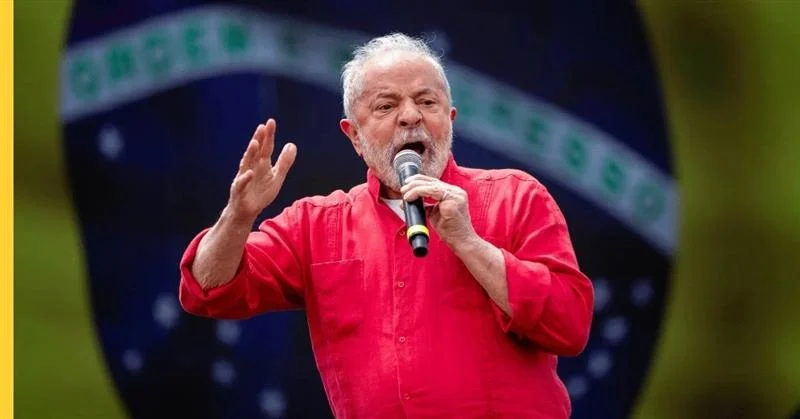
President Luiz Inácio Lula da Silva has signed a decree imposing a total ban on online gambling, which had been legalized in recent years after decades of prohibition.
Provisional Measure 1,394, issued on Friday, September 25, prohibits throughout the national territory the operation, offering, intermediation, and advertising of what are known as “bets.” The ban covers fixed-odds sports betting as well as online games and casinos. It also affects authorizations granted by states and the Federal District, although it does not include other lottery modalities already permitted under Brazilian legislation.
The law instantly prohibits new deposits or the acceptance of bets on platforms that were operating in the country. The Brazilian government has thus established a timeline requiring the definitive closure of websites and applications by October 6. Operators that until now held a license to operate in the country will not be able to request a refund or compensation for the fees they paid for their authorizations.
Although the measure takes effect immediately, it still must pass through Congress. As is the case with Brazilian provisional measures, it can apply from the moment of publication, but the Chamber of Deputies and the Senate must approve it for it to remain in force; if they fail to do so within the constitutional deadline, which can extend up to 120 days, it will lose validity.
The decision represents a drastic turn from recent years. It is worth noting that it was Lula himself who regulated betting in 2023, following its legalization in 2018. Since January 2025, companies that obtained licenses began operating in a regulated market, with taxes and oversight and control mechanisms.
International giants such as Betano, bet365, and Entain invested enormous resources in the transition to a regulated market.
For companies that allocated significant amounts of money to obtain licenses, establish businesses in Brazil, hire local staff, and adapt their products and services to comply with regulatory requirements, the consequences would be devastating.
Companies have a limited period to shut down operations
The closure timeline leaves operators with very limited room to maneuver.
Since September 25, new deposits have been prohibited, although users can access the platforms to withdraw any money they still have available. The deadline to do so voluntarily ends at 11:59 p.m. on October 5, and starting on the 6th, the websites and applications must be blocked in Brazil.
Between October 7 and 8, companies must report outstanding customer balances to financial institutions, and banks will have from October 9 to 14 to return them.
Likewise, brands have a 10-day period to remove their advertisements and physical and digital sponsorship elements.
Additionally, the Executive has created an interinstitutional committee to combat illegal activity. The Treasury and Justice ministries aim to identify and block unauthorized sites through collaboration with Anatel, internet providers, app stores, and financial institutions. Administrative sanctions for those who fail to comply with the new rules can reach up to 2 billion reals, in addition to activity suspensions.
From regulating the activity to banning it
What is surprising is the speed with which this turnaround has occurred, especially considering that Brazil spent years debating how to regulate betting.
In 2018, then-president Michel Temer ended decades of prohibition and legalized the activity; at the end of 2023, Lula passed Law 14,790, which established the rules for the sector.
Just a week ago, the Secretariat of Prizes and Bets (SPA) announced new measures aimed at strengthening the formal market and combating illegality through stricter payment-blocking mechanisms and financial control measures.
All those efforts have come to nothing with the ban.
The announcement was accompanied by another measure addressing an issue the government considers closely related: household debt.
Lula presented a new program to renegotiate overdue debts. The State plans to allocate 15 billion reals to purchase up to 150 billion reals in unpaid loans at discounts of at least 90%.
In the days leading up to the measure, Lula had hardened his rhetoric on betting, calling it a “public health problem.”
For the regulated sector, the decision raises justified doubts about legal certainty in Brazil.
Less than two years after the Government itself put in place the legal framework that allowed them to operate, they are now being asked to withdraw.
As a lawyer specializing in igaming recently said: “the sector will go through moments of great turbulence” if Congress gives its approval.
We will need to keep a close eye on the elections this coming Sunday, October 4.