
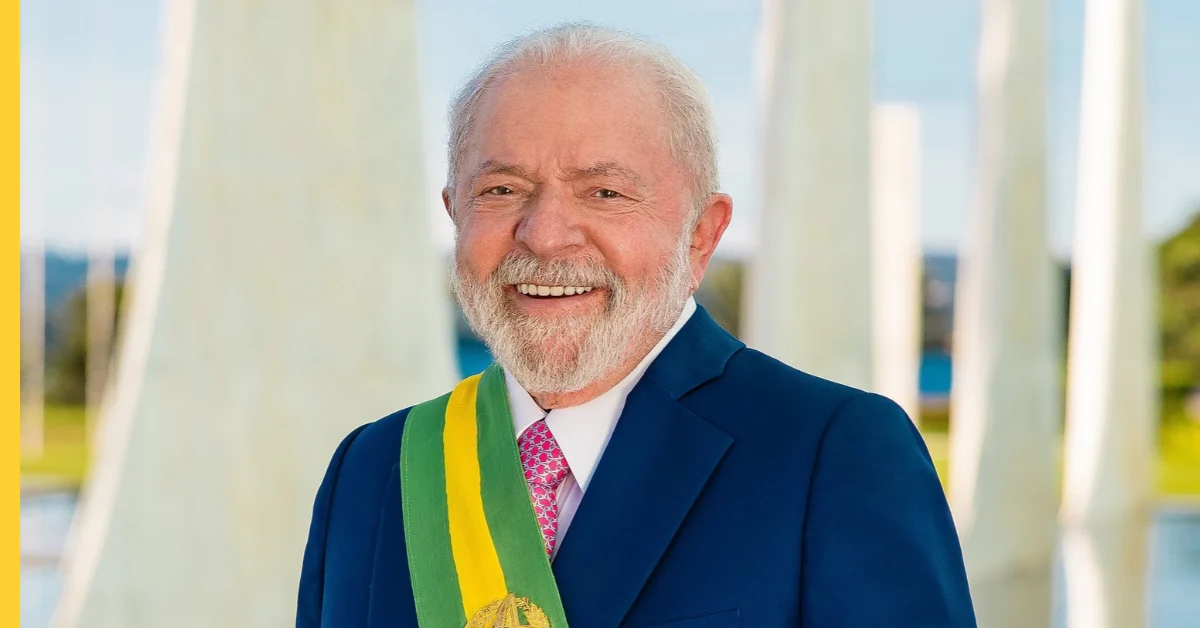
Luiz Inácio Lula da Silva has won an unprecedented fourth term as president of Brazil, a result that keeps in power the government responsible for the ban on betting in the country.
Lula obtained 51.75% of valid votes in Sunday’s (October 25) runoff against Flávio Bolsonaro, as of 9:12pm (Brasília time), with 99.75% of votes counted, meaning he was officially elected the country’s next president. At the same time, rival Flávio Bolsonaro had 48.25% of valid votes, according to the Superior Electoral Court (TSE).
The result represents a setback for a sector that had pinned its hopes on a change of government. In the first round, on October 4, Bolsonaro led with 47.03% against Lula’s 45.16%, and analysts considered him the favorite.
Bolsonaro was also the favored candidate among prediction market traders, such as on Polymarket, where he was given around a 78% chance of winning against Lula’s 22% in the weeks leading up to the runoff.
As votes began to be counted after the runoff, however, prediction markets shifted overwhelmingly to betting on a Lula victory. At 9pm (Brasília time), with around 80% of votes counted, Lula had a 99% chance of winning on Polymarket.
Lula signed Provisional Measure (MP) 1,394 exactly one month ago, on September 25. Operators’ websites went offline on October 6, and the licensees’ federal authorizations expired on Sunday, the same day as the vote.
Since he signed the ban less than 10 days before the first round, the re-elected government will need to defend it in Congress.
For operators, suppliers and investors, the result deepens the loss of confidence in Brazil. The country only licensed its regulated market in January 2025, after years of preparation and the payment of R$30 million (€5.3 million) for a license that, according to the MP, will not be refunded.
It’s not the end of the story
However, despite being in effect since President Lula signed it, the MP is not yet law. Congress must vote on it within 120 days of its publication, or it loses validity. The initial 60-day period ends on November 23 and can be extended once for a further 60 days.
As of October 21, the joint committee responsible for reviewing the text had not yet been established, and lawmakers had submitted more than 90 amendments. Some would reinstate sports betting; others would limit the ban to online casino games only.
A Congress that passed the 2023 betting law, Law 14,790, may prove less willing than the government to close the market entirely, especially in the case of sports betting.
The ban is also being challenged in the Supreme Federal Court (STF), where Justice Luiz Fux is the rapporteur for three lawsuits against the MP, including one filed by the industry associations ANJL and IBJR on September 28. The broadcasters’ association Abert and football clubs such as Flamengo have also joined the case.
With the runoff concluded, Fux is expected to decide whether to suspend the ban before the full court rules on the matter, Poder360 reported. In a response requested by Fux, the Office of the Attorney General of the Union (AGU) argued for keeping the ban fully in place, describing betting as a “dragon” that needed to be tamed.
The coming weeks in Congress, not Sunday’s vote, will decide whether Brazil’s regulated market can return in any form.