
The creation of the advertising and betting law in Rio Grande do Sul not only sparked a reaction from the sector but also resulted in the Direct Action of Unconstitutionality (ADI) 7971, at the Supreme Court, filed by the National Association of Games and Lotteries (ANJL).
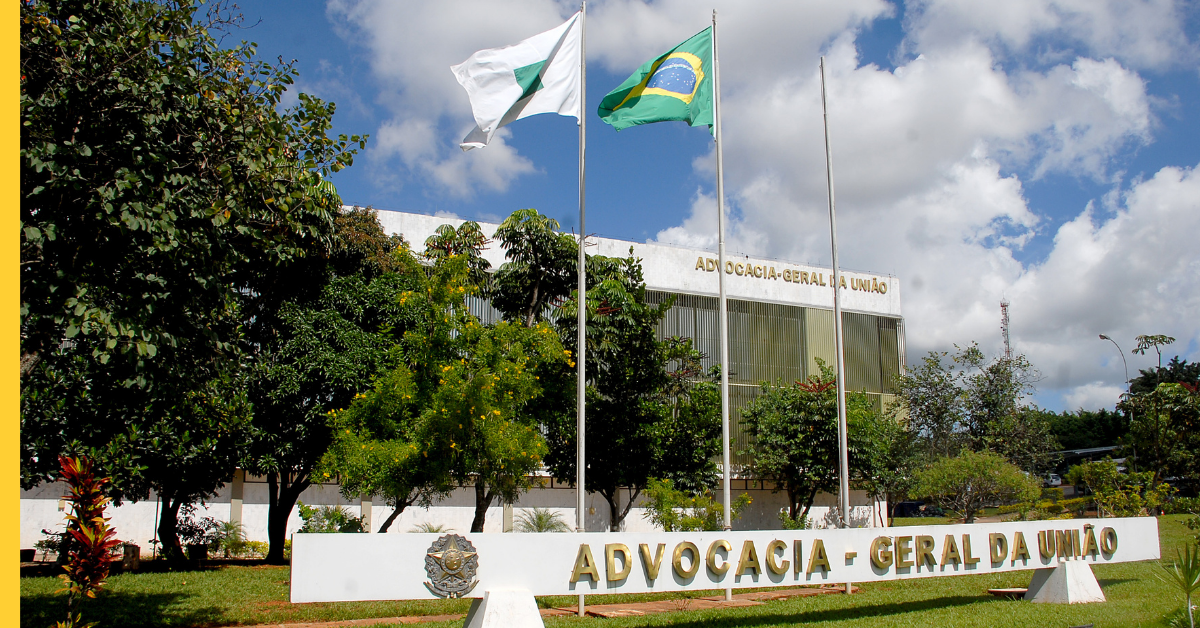
Now, the Attorney General’s Office (AGU) has also formally requested, in an attachment to the case, the temporary suspension of Law No. 16,508/2026, which is in effect in the southern state.
Conflicts between state and national jurisdiction
According to the AGU’s statement to the Federal Supreme Court (STF), the RS law makes clear the divergences between what falls under federal jurisdiction and state legislation.
Even though the RS law on betting ads was created with the intention of protecting consumers and restricting children and teenagers’ access to advertising, the proposal would exceed federal rules.
Advertising, publicity, and broadcasts of betting in Brazil were covered by federal Laws No. 13,756/2018 and No. 14,790/2023.
According to the AGU, “this Federal Supreme Court has a consolidated position that the concurrent jurisdiction of States to legislate on consumer protection does not authorize regulating obligational and contractual relations between private parties.”
What the lawsuit filed by ANJL says
The AGU’s move follows the lawsuit that the National Association of Games and Lotteries (ANJL) filed with the STF, arguing that Rio Grande do Sul imposed a set of rules that overlaps with the regulatory model defined by the federal government.
The main reason ANJL challenged the law on betting ads is based on the fact that legislation on advertising for fixed-odds services is the responsibility of the federal government.
Thus, states, such as Rio Grande do Sul, could not create their own rules, valid only within their own territory.
Expanded restrictions and impact on sponsorships
For its part, the Rio Grande do Sul government justified creating the law by claiming that federal regulations do not address how betting advertising should work.
For the state, the specifications created by the state law help reduce bettors’ debt and reduce minors’ exposure to the sector’s advertising.
Among the most relevant points of the law on betting ads in RS are:
- 15% of the ad must be dedicated to warnings about the risks of gambling;
- Warning audio must be at the same volume and speed as the rest of the ad;
- Audiovisual advertising on free-to-air TV, cable, streaming, and video can only be broadcast from 9 PM to 6 AM;
- Ban on images of animations, AI, and famous personalities aimed at minors, among others.
The law also restricts sponsorships, allowing only the brand name on team jerseys.
Next steps
With the case being processed as a priority, the preliminary injunction on the suspension of the law on betting ads in RS could be issued in the coming weeks.
In similar situations, the STF has favored federal jurisdiction, ensuring uniform rules for all states in the country.
On one hand, this would prevent fragmentation and the possible creation of region-specific laws.
However, it also would not address the demands that have been emerging as the betting market, and its advertising practices, evolve.
Overall, the final ruling on the merits is expected to take a while, potentially taking months or more than a year for a decision to be reached.