
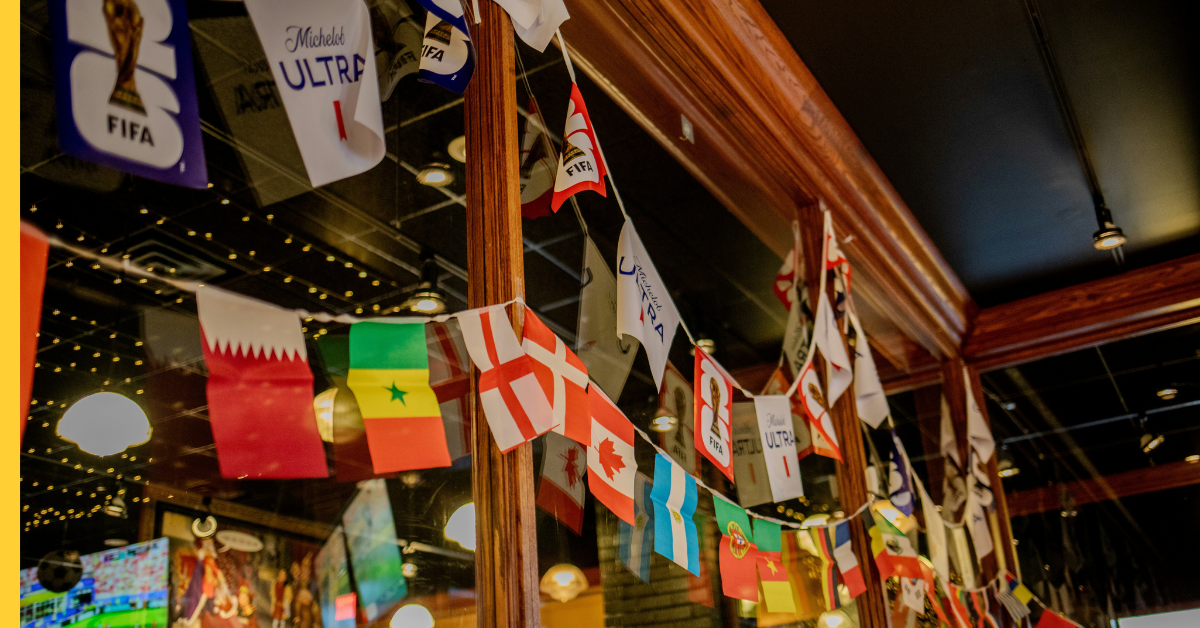
The handbook will help identify the problem of gambling addiction early, based on signs coming from industry employees during the 2026 World Cup.
Awareness initiatives about sports betting are multiplying in Brazil during the 2026 World Cup. Last week, the Ministry of Sport launched a campaign on social media providing guidance on responsible betting practices, in partnership with SNAEDE and SPA-MF.
Now, Abrasel-SP (Brazilian Association of Bars and Restaurants) is turning its focus inward: it has launched a handbook aimed at helping bars and restaurants identify signs of gambling addiction among employees during the World Cup.
The material was released by Abrasel-SP with the goal of helping industry business owners recognize early signs of betting addiction among their employees.
For the organization, the World Cup is a time when the intensification of operators’ advertising campaigns increases workers’ exposure to betting platforms.
Among the financial warning signs highlighted by the handbook are frequent requests for salary advances, recurring loans between colleagues, and constant reports of financial difficulties.
On the behavioral side, the material advises employers to watch for excessive cell phone use during work hours, anxiety related to game results, and exaggerated agitation on match days.
In the workplace, the warning signs include a drop in performance with no apparent reason, an increase in mistakes, recurring absences and lateness, as well as isolation, irritability, and disproportionate reactions to routine situations.
Why a handbook?
Asked whether Abrasel consulted licensed operators or ANJL when developing the handbook, Gabriel Pinheiro, an executive at the association, stated that the initiative arose independently:
“Creating this handbook is a priority and independent initiative of Abrasel, born from the urgency we observe daily in our kitchens and dining rooms. We did not wait for other sectors to act in order to protect the financial health and productivity of our teams.”
Pinheiro states, however, that the association is open to dialogue: “Our doors are open to ANJL and to licensed operators. If the betting market has effective tools for self-exclusion and responsible gambling, Abrasel has every interest in integrating those solutions into our handbook.”
Regarding a possible proposal to SPA or the Ministry of Finance to restrict betting advertising hours during the World Cup, Pinheiro rules out that possibility: “Our work with this handbook has a strictly internal scope focused on people management.
“Abrasel’s role with this initiative is simply to guide business owners and alert the sector to the direct impacts this phenomenon has been causing on our workforce,” he states.
The initiative reflects a broader movement: organizations outside the iGaming sector are beginning to treat the impact of sports betting as a corporate management issue, reinforcing sector-wide pressure for responsible advertising.
This topic has already been under discussion in the country through proposals for mandatory risk warnings in betting advertisements.
The material also recommends that managers speak with employees privately and without judgment, making clear that seeking help does not put their job at risk.
Among the free support channels indicated are Meu SUS Digital, the CAPS (Psychosocial Care Centers), Gamblers Anonymous, the CVV (Life Appreciation Center), and the UBSs (Basic Health Units).
Abrasel’s initiative joins a broader movement of organizations outside the iGaming sector that are beginning to treat the impact of sports betting as a corporate management issue, in parallel with the ongoing discussion in the country about mandatory risk warnings in betting advertisements.