
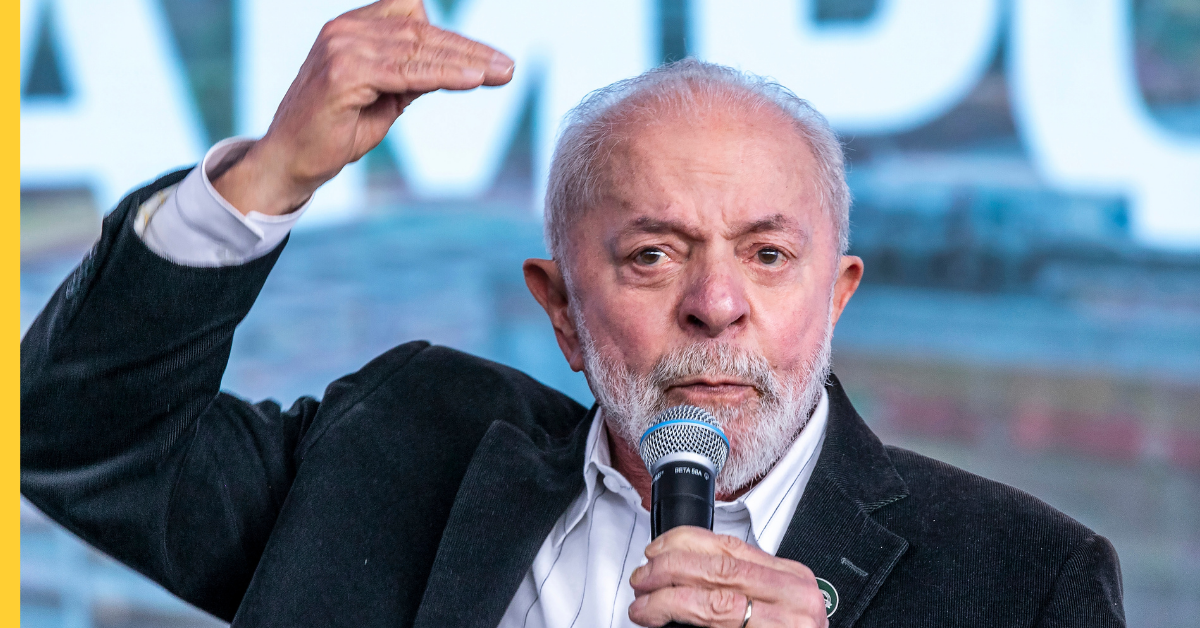
In the latest escalation of the debate over online betting in Brazil, President Luiz Inácio Lula da Silva once again criticized the sector, stating that, if it were up to him, he would shut down the bets.
In an interview given to ICL, he also criticized the lobby present in the industry and revealed that he has been discussing, together with other government departments, the end of betting houses.
Industry representatives, in turn, pushed back against the president’s statements. The Brazilian Institute of Responsible Gaming (IBJR) emphasized, in a statement, that the ban would drive bettors to the illegal market.
Lula’s opposition to gambling grows in an election year
The government’s stance regarding bets has shifted in tone during an election year. In his recent statements, Lula indicated concerns about family debt caused by excessive gambling and socioeconomic damage.
“If they cause the harm we believe they cause, why not put an end to the bets? Or else regulate so there aren’t so many in Brazil, if they even serve any purpose,” argued the president to ICL.
In 2023, however, the concern was related to the regulation of gambling, when Lula, in his first year of the new term, sanctioned Bill No. 3,626 of 2023.
The Betting Law, in turn, came into effect in 2025, and subsequently Lula approved the gradual increase in taxation on betting houses and online casinos, reaching 15% by 2028.
In any case, the president also emphasized that the decision on ending betting houses in Brazil will depend on discussions in the National Congress.
Regulation vs. ban
The sector reacted to Lula’s statements, including the IBJR. In a statement, the organization shared the same concerns as the government regarding the well-being of Brazilian families.
However, for the IBJR, “regulation is the safest and most effective tool to protect society.”
Furthermore, it argued that a possible ban would end up driving bettors to illegal betting houses, resulting in less consumer protection.
Adding to this is the fact that the parallel market, representing 51% of all activity, “moves R$40 billion annually,” causing a loss of “R$10 billion per year to public coffers.”
The data was published in a study released by Instituto Locomotiva and LCA Consultoria.
What can the market expect?
In the current scenario, the advance of harsher restrictions or even the banning of betting houses in Brazil could generate immediate consequences, threatening the betting market and licensed operators.
Regulatory uncertainty could lead to the growth of the illegal market, harming consumers and companies in the sector.
There is also a risk to tax revenue. Last year, when the Betting Law came into effect, the government collected R$9.95 billion in taxes from betting houses, according to data from the Federal Revenue Service.
On the other hand, if regulation prevails, there could be an increase in taxes and stricter rules regarding bets, as well as pressure to expand consumer protection measures.