
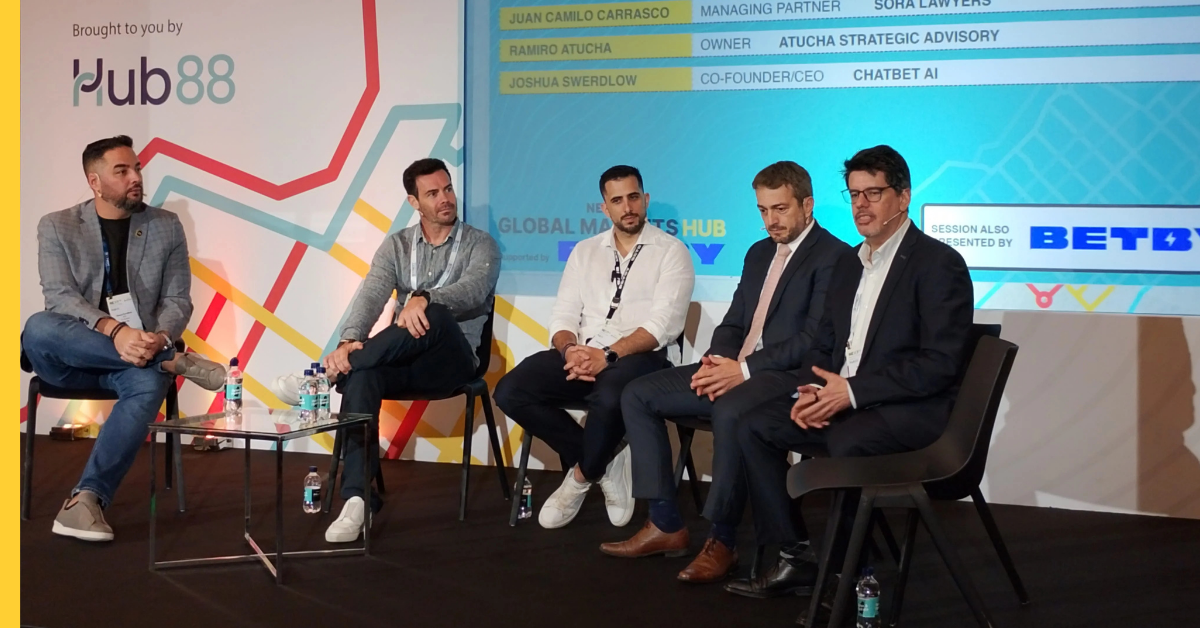
Opportunities, challenges, and the regulated betting market in Latin America were central themes of the panel dedicated to the region during NEXT Summit Valletta 2026, on May 28 in Malta.
Under the theme ‘Latam: Beyond the Brazil Obsession‘, the session featured renowned industry professionals, including lawyers, consultants, operators, and B2B companies.
Although Brazil has great potential in the region, with projections to reach US$5 billion by 2027, Colombia leads in terms of business stability, according to experts.
Colombia vs. Brazil post-regulation
From the perspective of the regulated betting market in Latin America and the major countries involved, it can be said that the region is now in the post-regulation period.
However, the two powerhouses of the sector, Brazil and Colombia, show distinct characteristics, according to the panelists.
For Juan Camilo Carrasco, managing partner at the law firm Sora, Colombia, “with 15 operators and a GGR of around US$900 million,” allows all verticals to be offered.
For example, permission for crash games, popular among bettors in the country, was recently included.
“Markets with a very stable regulatory structure demonstrate maturity and stability,” both for operators and game providers as well as for bettors, Carrasco emphasized.
Lack of clarity and instability
In Brazil, however, the reality is different, even more than a year after the Betting Law came into effect.
Thomas Carvalhaes, CEO and founder of TC iGaming Consultoria and moderator of the panel, highlighted the instabilities generated in the sector due to statements by President Luiz Inácio Lula da Silva against betting in the country.
Even though challenges are part of business, “when you have a regulator positioning itself against the industry, that becomes even more of a threat, a problem,” Carvalhaes noted.
“Colombia is a model for all of Latin America in terms of regulatory maturity. Everything is very clear, taxation is clear, quite different from Brazil,” he assessed.
Watch and wait
Clear rules and a coherent tax regime were identified by the panelists as necessary aspects for the betting market in Latin America to function properly.
“The biggest problem is not when there is no regulation, but when there is one and it is being tested in real time. And, in short, that’s what’s happening in Brazil,” said Chris Nikolopoulos, CCO of Betby.
In addition, the illegal market is also a cause for concern, causing licensed operators to be “squeezed from all sides,” as Carvalhaes pointed out.
Ramiro Atucha, founder of Atucha Strategic Advisory and a specialist in the Latin American market, believes that the best solution against illegal betting is “allowing regulated operators to be competitive.”
And IP blocking, as has been applied in Brazil, is not enough. “Regulators change the regulation, the illegal market grows, and nothing happens. They claim to strongly combat illegal sites by blocking IPs, which is redundant,” Atucha concluded.